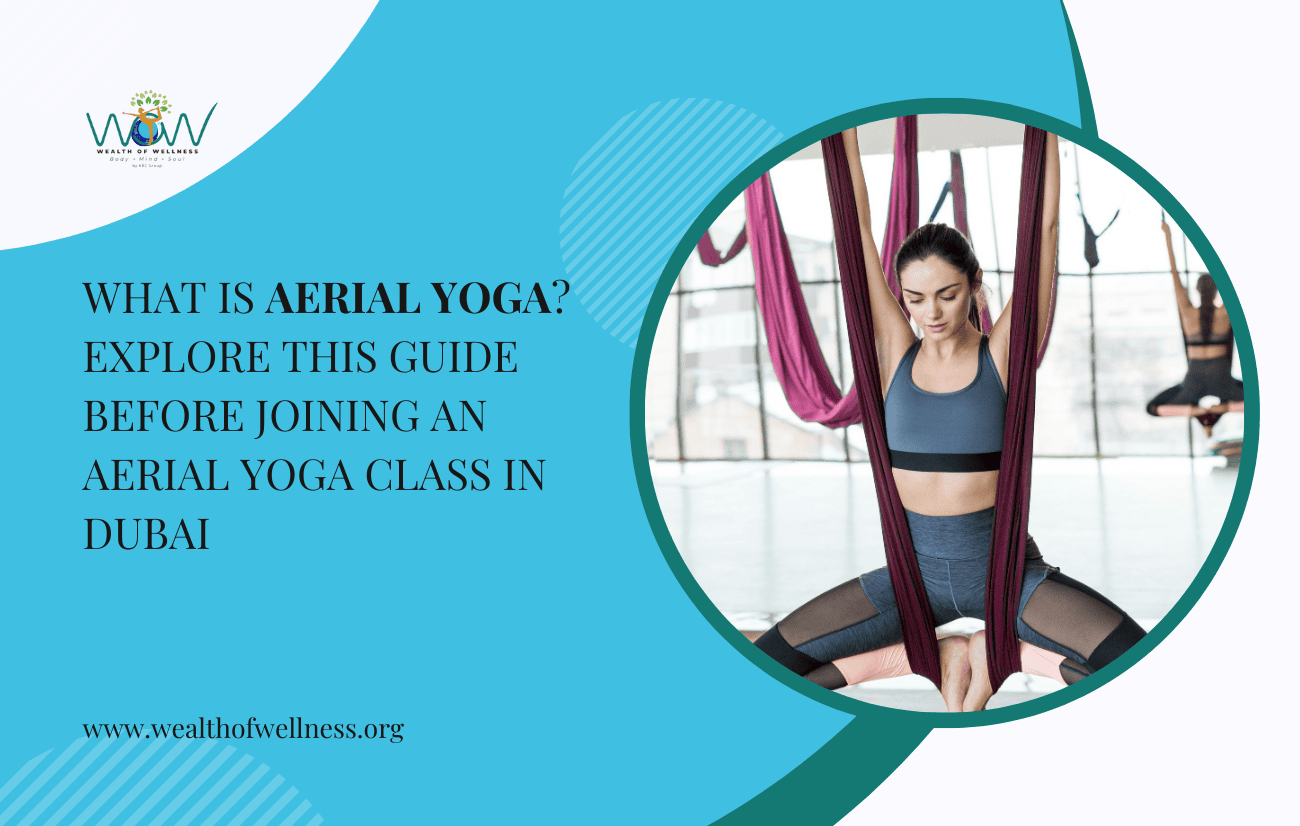
What is Aerial Yoga? Explore This Guide Before Joining An Aerial Yoga Class In Dubai
Aerial yoga suspends your body in a silk hammock while you perform traditional yoga poses, creating an experience that looks like anti-gravity and feels like freedom. The practice combines the mind-body connection of yoga with the decompression benefits of inversion therapy, supported by silk rather than your own strength alone. Whether you’re a yoga beginner or someone looking to deepen your practice, aerial yoga offers a unique entry point to wellness that challenges both body and mind.
This guide walks you through everything you need to know before your first class: how it works, who it’s for, what safety looks like, and why thousands of people in Dubai and beyond are discovering this transformative practice.
What Exactly Is Aerial Yoga?
Aerial yoga is a form of yoga performed while suspended in a soft, fabric hammock or aerial silk. Unlike traditional yoga, where gravity holds you down, aerial yoga uses suspension to support your body weight while you move through familiar yoga poses and some completely new ones.
The practice isn’t entirely new. It emerged in the early 2000s, combining traditional yoga philosophy with inversion therapy and acrobatics. Some people call it anti-gravity yoga, though the name is playful; gravity still works, it just works differently. You’re floating, but safely supported.
The equipment is simple: a strong fabric hammock hangs from the ceiling at chest height. The fabric distributes your body weight evenly, which is why aerial yoga feels so different from letting yourself hang from a bar. Your spine, joints, and muscles experience a completely new relationship with gravity.
How Does Aerial Yoga Work? The Mechanics Explained
When you step into a suspension yoga class, the hammock becomes your props, your teacher, and your safety net all at once.
The Setup
The fabric hammock wraps around your body, sometimes under your arms, sometimes around your hips, sometimes cradling your legs. The anchoring system is engineered for safety; each hammock can support 300+ pounds, and classes are regularly inspected for equipment integrity. You’re never swinging chaotically. Movement is controlled.
Spinal Decompression
When you hang in the hammock, gravity gently elongates your spine. This decompression is one of the signature benefits: vertebrae that are compressed by daily posture and gravity get space to breathe. You may literally grow ½ inch during a hanging inversion not permanently, but the temporary elongation offers relief and improved alignment.
Compression in the spine happens naturally over time. Sitting, standing, and repetitive movements all compress the discs between your vertebrae. Aerial yoga reverses this by letting you hang and relax.
The Real Benefits: Why People Practice Aerial Yoga
Practitioners often describe feeling lighter, more flexible, and calmer after their first class. Here’s what science and experience say about the benefits:
Physical Strength & Flexibility
Aerial yoga engages your core, shoulders, arms, and legs in new ways. When you’re supported by the hammock, you can move into deeper stretches than traditional yoga allows. The silk gives you props to work with: you lean into it, twist it, support yourself partially, and progress gradually.
Many people experience increased flexibility after just a few sessions. Your muscles relax in the hammock because you’re not fighting gravity entirely; the fabric supports some weight. This allows you to sink deeper into stretches safely.
Core strength develops naturally. Maintaining balance in the hammock, moving in and out of poses, and stabilizing your body requires deep engagement of your core muscles.
Spinal Health & Back Pain Relief
If you experience lower back pain, aerial yoga offers a gentler alternative to floor-based exercises. Inversion relieves pressure on the discs and nerves. Research on inversion therapy shows it can help reduce pain and improve spinal alignment over time.
This doesn’t mean aerial yoga “cures” back pain; it means it supports spinal health by decompressing and strengthening the muscles that stabilize your spine.
Mental Clarity & Stress Relief
Inversions increase blood flow to the brain. Hanging upside down (even partially) shifts your perspective literally and metaphorically. Many practitioners report feelings of calm, clarity, and emotional release.
Yoga itself is a proven stress-reliever, and aerial yoga amplifies this by adding novelty, playfulness, and the meditative focus required to balance in a hammock. You can’t think about work emails when you’re concentrating on not falling out of a silk cocoon.
Improved Circulation & Lymphatic Health
Inversions stimulate your lymphatic system, which relies on movement and gravity to circulate. When you flip your perspective, lymph flows back toward your heart more efficiently. This supports your immune system and natural detoxification processes.
Balance & Proprioception
Your proprioceptive system (your body’s awareness of itself in space) gets a workout in aerial yoga. The hammock is unstable not dangerously, but enough to require your nervous system to engage. Over time, this improves balance, coordination, and body awareness.
Is Aerial Yoga Safe? What You Need to Know
Safety is the first concern most people raise. The answer is clear: aerial yoga is safe when taught by qualified instructors using proper equipment and modifications.
The Safety Framework
Certified instructors undergo specific training in aerial yoga. They know how to scale poses for different body types, strength levels, and experience. Every class includes modifications—ways to do the pose partially, or with more support from the hammock.
Equipment is regularly inspected. Hammocks, straps, and anchor points are built to withstand far more weight and stress than a human body exerts during practice.
Medical Considerations & Modifications
Certain health situations benefit from a conversation with your instructor and doctor:
- Recent spinal surgery – Connect with your doctor for personalized guidance on which poses support your recovery.
- High blood pressure management – Your instructor can guide you on poses that work with your condition.
- Eye conditions – Some poses may not be ideal; your instructor will suggest alternatives that deliver the same benefits.
- Pregnancy – Many aerial poses are wonderful during pregnancy; always inform your instructor so they can optimize your experience.
- Bone density considerations – Your instructor knows how to scale poses for optimal benefit and support.
- Recent shoulder, neck, or head recovery – Your instructor will suggest poses that allow you to participate fully while you heal.
The key is communication. Mention any medical conditions or recent injuries when you arrive. Your instructor is trained to customize your experience, ensuring you get maximum benefit while honoring your body’s current state.
Modifications for Every Body
Aerial yoga is not one-size-fits-all; it’s customized to fit you. If you’re heavier, the instructor uses more fabric support. If you’re less flexible, you stay closer to neutral positions. If you’re very strong, you challenge yourself with more advanced poses.
This is why class size matters. Small classes (8–12 people) allow instructors to see and modify individual students. This is what you’ll experience at WOW’s aerial yoga classes in Dubai.
What Happens in Your First Aerial Yoga Class
Walking into an aerial yoga class for the first time is an exciting moment. Here’s how a typical class flows:
Before You Arrive
Wear comfortable, fitted clothing. You don’t need expensive yoga clothes, just something fitted enough that the fabric sits smoothly. Tight pants and a fitted top work perfectly. Skip heavy jewelry and remove glasses (or use a strap if needed).
Arrive 10–15 minutes early. Your instructor will show you how the hammock works, adjust it to your height, and walk you through the setup. They’ll guide you through how to get in, how to sit, and how to hang. This orientation sets you up for immediate comfort and confidence.
Class Structure (60 minutes typical)
A typical aerial yoga class follows this flow:
Opening (5 minutes): You sit in the hammock and breathe. The instructor guides you into the present, similar to a traditional yoga class opening. You’re already experiencing decompression just by hanging gently.
Warm-up (10 minutes): Gentle movement in the hammock. You’ll rock side to side, practice breathing patterns, and get comfortable with the fabric. The hammock moves beneath you; you’re not rigid or locked in.
Active poses (30 minutes): This is the core of the practice. You’ll move through familiar yoga poses (downward dog, warrior poses, forward folds) but performed in or with the hammock. The fabric supports you differently than solid ground does.
You’ll also experience inversions, partial or full. Hanging upside down (or head-down) is dramatic, but your instructor builds up to it. You might start by leaning back in the hammock with feet on the ground. Later, you lift your feet and fully invert. It’s progressive.
Cool-down (10 minutes): Restorative poses in the hammock. You’ll lie back in the fabric; it feels like a cocoon, and you relax into stillness. This is where the mental clarity and emotional release often happen.
Savasana & closing (5 minutes): Final meditation while supported by the hammock. This is typically the quietest, most peaceful part of class.
What You'll Actually Feel
Your first class, you might experience:
- Awareness – You’re fully present, trying something fresh and engaging.
- Surprise – It’s more accessible than you expected (the hammock supports you intelligently).
- Focus – Finding balance in the hammock brings complete mental engagement and presence.
- Lightness – That spinal decompression kicks in immediately.
- Calm – The combination of inversion, focus, and supported stretching creates deep relaxation.
Within the first 15 minutes, you’ll experience how stable and supported the hammock is, giving you confidence to explore the practice fully.
Who Is Aerial Yoga For? A Practical Guide
Absolute beginners to yoga
You don’t need yoga experience. The hammock actually makes some poses easier for beginners because it supports you. You can focus on alignment and breathing without struggling to hold yourself up.
Experienced yoga practitioners
If you’ve done traditional yoga, aerial yoga will challenge you differently. Familiar poses feel new. Your body learns new patterns of engagement.
People with limited mobility or stiffness
The hammock’s support lets you move more safely and go deeper into stretches. People with arthritis, tight hips, or chronic stiffness often find aerial yoga gentler than floor-based yoga.
Athletes and fitness enthusiasts
Aerial yoga complements athletic training. It builds functional strength, improves flexibility, and aids recovery, especially after high-impact activities.
People seeking stress relief and mental clarity
The combination of inversion, focus, and supported relaxation makes aerial yoga deeply calming. If you’re looking for stress management, aerial yoga delivers both physical and mental benefits.
Older adults
Aerial yoga can be modified for older adults. The support reduces fall risk, and the low-impact nature is gentle on joints. Many studios in Dubai serve active older clients who find that aerial yoga maintains mobility and strength.
Anyone curious about trying something new
You don’t need a “reason” beyond curiosity. The practice is designed to be accessible and rewarding for anyone willing to show up.
Common Aerial Yoga Poses for Beginners
Here are poses you might encounter in your first few classes:
Hammock Cocoon (Supported Rest)
You lie back in the hammock with your head and shoulders supported, knees bent. Feet stay on the ground. This is restful and decompressing, perfect for relaxation and spinal relief.
Sitting Forward Fold (Supported Stretch)
You sit in the hammock facing forward, legs extended or bent, and fold toward your thighs. The fabric supports your back and allows you to go deeper than you might on a mat.
Hammock Hang (Partial Inversion)
You grip the fabric and hang with your upper body supported and your legs extended or bent. Your head hangs below your heart — not a full inversion yet, but deeply decompressing.
Aerial Warrior (Supported Balance)
A traditional warrior pose, but performed with the hammock supporting one leg or your side body. Balance is easier because partial support reduces demand on stabilizer muscles.
Each pose has modifications. Your instructor shows you the “beginner” version, the “intermediate” version, and the “advanced” version, and you choose based on how you feel that day.
FAQ
FAQs
Q: Is aerial yoga hard?
A: It’s engaging and accessible at the same time. You’re welcome whether you’re strong, flexible, or just beginning. The hammock intelligently supports your weight, and your instructor adapts every pose to your level. Most people feel capable and empowered after the first few minutes.
Q: Do I need upper body strength?
A: The hammock provides intelligent support, so you don’t arrive with requirements. You naturally build strength and endurance as you practice, which many people enjoy as a bonus benefit of consistency.
Q: Can I do aerial yoga if I’ve never done yoga before?
A: Absolutely. Many aerial yoga students are yoga beginners. The hammock makes certain aspects easier, and you’ll learn proper form from your instructor.
Q: What’s the age limit for aerial yoga?
A: There’s no hard age limit. Children (ages 6+) can practice with parent supervision in some studios. Older adults are welcome if they’re cleared by their doctor. The class is scaled for the participant.
Q: How often should I practice aerial yoga?
A: 1–2 times per week is ideal for beginners. Many people progress to 2–3 times weekly as they advance. Start slowly and listen to your body.
Q: What if I want to take inversions gradually or skip them?
A: Your instructor creates a path that matches your comfort level. Many poses are performed sitting or with feet grounded. You progress at your own pace, and you’re always in control of which variations feel right for you. Every class offers options.
Q: Can I do aerial yoga if I’m pregnant?
A: Some poses are safe in pregnancy (supported stretches, light hammock use), but many inversions are not recommended. Always inform your instructor immediately and get clearance from your midwife or doctor.
Q: How long until I see results?
A: Physical benefits (increased flexibility, reduced back pain, better posture) often appear within 2–4 weeks of regular practice. Mental benefits (reduced stress, improved focus) often appear after the first class.
Why Choose Aerial Yoga in Dubai at Wealth of Wellness?
At Wealth of Wellness, our aerial yoga classes are taught by certified instructors trained in both yoga philosophy and aerial-specific safety. Our studios are designed for comfort, equipment is rigorously maintained, and class sizes are kept small so you receive individual attention.
We understand that beginners have questions and sometimes anxiety. Our instructors create a non-judgmental space where you can try, explore, and gradually build confidence. We also offer holistic wellness services that complement aerial yoga, from acupuncture for post-class recovery to meditation for mental clarity.
If you’re curious about how yoga can transform your life, aerial yoga is one powerful entry point.
Getting Started: Your Next Steps
You now know what aerial yoga is, how it works, and why it’s worth trying. The final step is simple: show up.
Before your first class:
- Book your appointment at +971 56 522 7986 with Wealth of Wellness. Mention it’s your first aerial yoga experience.
- Wear comfortable, fitted clothing – no baggy layers or heavy jewelry.
- Eat lightly – a snack 1–2 hours before is fine; a heavy meal is not.
- Arrive 10 minutes early so you can get oriented without feeling rushed.
- Tell your instructor about any injuries or medical conditions.
During class:
Listen to your body’s feedback. If you want to adjust a pose, tell your instructor. Every pose has variations from foundational to advanced. Taking the variation that serves you best is intelligent practice that builds strength and confidence over time.
After your first class:
Most people feel amazed, energized, or deeply relaxed. Some people experience pleasant muscle awareness the next day, a sign your body is adapting and building new strength. Hydrate, stretch gently, and many people book their second class right away while the positive feelings are fresh.
Aerial yoga isn’t a trend or a gimmick. It’s a legitimate practice that combines ancient yoga wisdom with modern understanding of how bodies move, heal, and strengthen. Thousands of people in Dubai have discovered that hanging in a silk hammock is one of the most grounded, centered, and liberating experiences available.
Your first class awaits. It’s time to defy gravity and discover what you’re capable of.
External Resources
- Medical Research on Inversion Therapy: Mayo Clinic on Inversion Therapy Benefits and Risks
- Yoga Philosophy & Practice: Yoga Journal’s Beginner’s Guide to Yoga
- Spinal Health & Decompression: Cleveland Clinic on Spinal Decompression
- Fitness & Core Strength: American Council on Exercise (ACE) – Suspension Training Benefits
- Mental Health & Stress Relief: American Psychological Association on Exercise and Mental Health

Amsalekha Muniraj
Amsalekha is an internationally certified yoga instructor (RYT 700) and wellness expert with 5+ years of teaching experience. She specializes in Ashtanga Vinyasa, Power Yoga, Aerial Yoga, and Sound Healing Therapy, serving students from beginners to advanced practitioners globally. Certified in multiple yoga disciplines, Ayurvedic holistic therapy, and sound healing, Amsalekha combines traditional wisdom with modern wellness science. She has led major workshops, including a 108 Surya Namaskar session with 4,000+ participants, and continues to help students build strength, reduce stress, and achieve holistic well-being.


Pingback: What Are The Benefits Of Visiting A Yoga Retreat In Dubai? Check It Out Here | Wealth Of Wellness0
August 26, 2026