Defy Gravity: 17 Misunderstood Facts about Aerial Yoga Revealed
Aerial yoga catches your attention. You see photos of people floating gracefully in hammocks and sense possibility. Absolutely, it’s for you. Aerial yoga adapts beautifully to every body, every age, and every fitness level. This guide clarifies 17 common assumptions, confirming what you’ve intuited: aerial yoga delivers real transformation. By the end, you’ll understand exactly why thousands of people worldwide are embracing this life-changing practice.
SAFETY & FEAR CONCERNS
Myth 1: Aerial Yoga Is Only for Super Flexible People
Fact: The hammock helps you access deeper stretches safely from exactly where you are. You can start your practice today, regardless of your current flexibility level.
The fabric sling supports your body and lets you lengthen muscles gradually. The hammock provides the foundation you need to progress. Over time, flexibility improves naturally because you’re practicing in a supported environment with assistance built in.
Myth 2: Aerial Yoga Is Dangerous
Fact: With certified instruction and proper progression, aerial yoga is safe. Support systems are built in just like any well-designed physical practice.
Safety is built on three foundations: a certified instructor, secure equipment, and your attention to your body’s signals. Gyms and studios that offer aerial yoga meet safety standards for installation and maintenance. Classes start with foundational techniques designed for your comfort. Thousands of people practice successfully every week.
Myth 3: You'll Fall Out of the Hammock
Fact: Modern aerial hammocks are engineered for safety. They support multiple times your body weight. The fabric provides secure, reliable support when technique is correct and equipment is maintained.
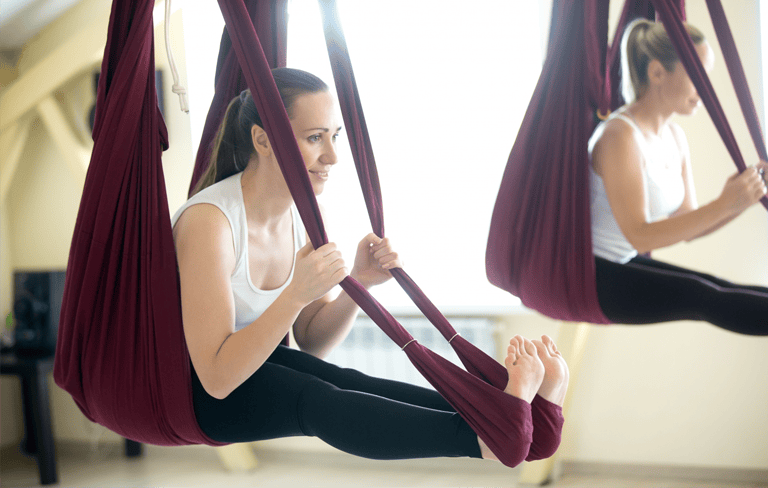
The fabric wraps around you protectively. Your instructor teaches you how to sit, balance, and shift weight with confidence. The hammock becomes second nature within a few sessions. Think of it like learning to ride a bike, unfamiliar at first, then fluid and natural.
Myth 4: Aerial Yoga Is Bad for Your Neck and Spine
Fact: Proper alignment and guided progression decompress the neck and spine. Inversions actively relieve pressure and create space.
When you hang suspended, gravity gently lengthens your spine. Studies show spinal elongation of up to 1.5 inches per session. This decompression relieves pressure on discs and nerves. Your instructor guides precise alignment to optimize cervical spine health. People with prior neck experiences work beautifully with instructor-designed modifications. Learn more about how aerial yoga supports joint and muscle health.
Myth 5: Inversions Are Too Risky
Fact: Inversions increase blood flow to the brain and activate your parasympathetic nervous system. Special considerations apply only to specific health conditions, not the practice itself.
Hanging upside down creates a novel, energizing sensation. Your body adapts beautifully and discovers a fresh perspective in minutes. Increased blood flow to your head generates vitality and energizes your mind within one or two sessions. People with specific health conditions explore tailored, supportive inversion variations with their instructor. For most practitioners, inversions deliver powerful benefits: enhanced mental clarity, optimized circulation, and profound stress relief.
ACCESSIBILITY & INCLUSIVITY
Myth 6: Aerial Yoga Is Only for Young and Fit People
Fact: Aerial yoga adapts to all ages and fitness levels. Your instructor modifies poses for your body.
The images you see online feature fit practitioners. In reality, classes include older adults, people recovering from injury, and people with arthritis thriving at every stage. The hammock becomes your assistant and partner. Age opens doors to modifications tailored just for you. The only requirement is your willingness to listen to your body.
Myth 7: It's Too Complicated for Beginners
Fact: Foundational classes build confidence step by step. Most people feel comfortable within 2–3 sessions.
Your first class focuses on foundations: how to sit in the hammock, how to breathe, how to shift your weight. You start with accessible poses that build your foundation. The instructor demonstrates options and variations for every pose. You progress at your own perfect pace. Start your aerial yoga journey with beginner-friendly classes at Wealth of Wellness.
Myth 8: Pregnant Women Can't Do Aerial Yoga at All
Fact: Aerial yoga offers wonderful modifications designed specifically for pregnancy. Gentle, supported poses deliver tremendous benefits during this special time.
Pregnancy transforms your body and center of gravity beautifully. Gentle, supported poses offer tremendous benefits: enhanced flexibility, improved circulation, and deep relaxation. Many expectant mothers practice aerial yoga with specialized modifications designed for pregnancy. You’ll work with a prenatal-trained instructor who specializes in modifications. Always consult your doctor first to confirm it’s right for your pregnancy.
Myth 9: Aerial Yoga Is Too Expensive
Fact: Drop-in classes at most studios are comparable to premium yoga or fitness classes. No upfront equipment cost required.
One aerial yoga class typically costs $20–$30, comparable to premium yoga or Pilates classes. You invest in the class itself, not in equipment or hammock purchases. Studios handle all installation and maintenance. Many studios offer introductory packages that make starting affordable. You’re investing in your flexibility, strength, and mental health real returns for your wellness journey.
EFFICACY & BENEFITS
Myth 10: Aerial Yoga Doesn't Build Real Strength
Fact: Gripping, stabilizing, and balancing in the hammock builds significant core, upper-body, and functional strength.
When you’re suspended, your body must work constantly to stay balanced. Your forearms grip the fabric. Your core stabilizes your position. Your lats and shoulder muscles engage to hold poses. This builds real, functional strength you can use in daily life: lifting, carrying, maintaining posture. Discover how aerial yoga strengthens your entire body.
Myth 11: Aerial Yoga Is Just a Fad
Fact: Aerial yoga has mainstream adoption backed by physiotherapists and wellness practitioners. Evidence supports benefits for pain management and flexibility.
Christopher Harrison trademarked AntiGravity Yoga in 2007. The practice has been refined and studied for nearly two decades. Physical therapists recommend it to patients for rehabilitation and wellness. Studios operate worldwide. It continues to grow and become standard in wellness programs globally.
Myth 12: It's Similar to Regular Yoga, Just Hanging
Fact: The hammock fundamentally changes biomechanics. Gravity assists your poses. Deeper stretches become possible. Inversion benefits exist only in aerial practice.
Regular yoga uses the ground for resistance and stability. Aerial yoga uses the hammock for support and gravity for assistance. These complementary practices offer different outcomes and benefits. Spinal decompression through suspension offers unique therapeutic advantages unavailable in ground-based practice. Aerial yoga creates distinct benefits for distinct goals.
PRACTICAL CONCERNS
Myth 13: Aerial Yoga Will Make You Dizzy or Nauseous
Fact: Hanging inverted creates a new sensation that your body adapts to quickly, typically within 1–3 sessions. Instructors teach techniques to help you acclimate smoothly.
Hanging inverted is a novel experience for your inner ear. Your body registers motion and position in a new way. This is a temporary adaptation phase. As you practice, your vestibular system grows stronger and accustomed to the new position. Your instructor teaches you breathing and positioning techniques to enhance your comfort. You’re joining thousands who’ve adapted beautifully. It becomes natural quickly.
Myth 14: Aerial Yoga Decompresses Your Discs Too Much
Fact: Spinal decompression relieves compression safely. With proper technique, elongation is gentle and therapeutic, creating beneficial relief.
Your discs compress throughout the day from gravity, sitting, and movement. Hanging suspended reverses this compression. The 1.5-inch elongation is temporary your spine returns to normal size after class. This temporary relief reduces pressure and pain. It’s the same principle as inversion therapy, which physical therapists use therapeutically. This is beneficial, not harmful.
Myth 15: You Need Special Equipment or Home Installation
Fact: Aerial yoga thrives in professional studio environments with certified instruction. Studios provide secure, properly installed equipment and expert guidance.
Your instructor’s studio features professionally installed, regularly inspected hammocks. Ceiling anchoring meets all safety standards and engineering specifications. You enjoy the complete experience in a purpose-built environment. Studios handle all setup and maintenance. Professional supervision and expert instruction optimize your safety and progress.
Myth 16: Everyone Will Judge You for Trying Something Unusual
Fact: Aerial yoga has mainstream adoption. Studios report diverse class demographics. Focus is on personal wellness, not judgment.
Aerial yoga thrives in mainstream gyms, yoga studios, and wellness centers worldwide. Your classmates include CEOs, parents, athletes, retirees, and adventurers from every walk of life. Everyone chose this transformative practice. The energy is welcoming and encouraging. Everyone celebrates their first-day courage. The community embraces and uplifts one another.
READINESS & GETTING STARTED
Myth 17: You Need to Be Super Experienced in Regular Yoga
Fact: Aerial yoga welcomes everyone, with or without prior yoga experience. Your instructor meets you exactly where you are.
Your first class works for total beginners. Yes, yoga experience brings body awareness you can apply immediately, but it’s not required. Many people start aerial yoga with zero yoga background and thrive from day one. Your only requirements are openness to learning and attention to your body’s signals.
FAQ
FAQs
Q: What is aerial yoga?
A: Aerial yoga is a modern practice combining traditional yoga, Pilates, and acrobatics performed in a silk hammock suspended from the ceiling. The hammock provides support, allows deeper stretches, and enables inversion therapy. It was developed by Christopher Harrison in 2007.
Q: How Does It Work?
A: You sit or lie in the hammock while your instructor guides you through poses. Your body weight creates resistance and deepens stretches. Gravity assists certain movements. The fabric supports your spine and joints. You’re never left unsupported; the hammock is your assistant throughout class.
Q: Perfect Preparation: Sharing Your Health History
A: We celebrate all bodies and health backgrounds. Sharing your health story with your instructor enables them to design your personalized experience. People managing heart health, blood pressure, glaucoma, or arthritis benefit from consulting their healthcare provider first, then discovering wonderful, supported options with their instructor. Pregnant women flourish with prenatal-trained instructors who specialize in pregnancy-optimized modifications. People with neck or spinal experiences partner with instructors to find perfect, supportive variations. This dialogue ensures your first class celebrates and honors your unique body.
Q: What Should I Wear?
A: Choose comfortable, fitted clothing for optimal movement: yoga pants, leggings, or fitted tops. Snug-fitting layers keep you secure in the hammock. Leave jewelry and watches in your locker for convenience. Socks or bare feet both work well (check with your studio preference). Your instructor will provide outfit guidance tailored to your studio’s needs.
Q: What Should I Expect in My First Class?
A: Your first class focuses on foundations: getting in the hammock safely, basic poses, breathing, and how to shift weight smoothly. Your instructor explains everything clearly. You’ll start with foundational poses designed for beginners, building confidence each step. Most classes are 45–60 minutes. Arrive early so your instructor can learn about your flexibility, health, and experience level; they’ll customize the class for you. Learn what to expect at your first aerial yoga session.
Q: How Often Should I Practice?
A: Start with 1–2 classes per week to allow your body to adapt and build strength. Regular practice yields better results than occasional sessions. A steady rhythm of two weekly classes creates momentum and continuous progress. Your instructor recommends a personalized progression plan based on your goals.
Q: Will I Be Sore After My First Class?
A: Mild muscle sensation is common and positive. You’re engaging muscles in fresh, beneficial ways. This sensation typically peaks 24–48 hours after class and fades within a few days. Stretching and hydration support your recovery. This response shows your muscles actively adapting and getting stronger.
Q: Is There an Age Limit?
A: Aerial yoga welcomes all ages beautifully. Children thrive with age-appropriate instructors. Older adults practice and excel regularly. Age brings wisdom that enhances your practice. Your personalized approach adapts to your current health and fitness level.
THE REAL BENEFITS: WHY PEOPLE LOVE AERIAL YOGA
Aerial yoga delivers profound, measurable benefits that transform your wellness:
Physical benefits include core strength, improved flexibility, spinal decompression, better posture, and joint relief. Many people experience reduced back pain after a few sessions.
Mental benefits include stress relief, improved focus, better sleep, and increased confidence. Inversions activate your parasympathetic nervous system, your body’s relaxation response.
Emotional benefits include body positivity and self-trust. You learn what your body can do. You build confidence trying something challenging. You join a supportive community.
These benefits compound over weeks and months. Your practice deepens. Your body changes. Your mind settles.
GET STARTED WITH AERIAL YOGA AT WEALTH OF WELLNESS
Ready to discover the truth for yourself? Aerial yoga classes at Wealth of Wellness are designed for all levels, from beginners to advanced practitioners. Our certified instructors guide you safely and supportively through every step. We focus on proper alignment, gradual progression, and personalized modifications for your unique body.
Your first class opens new possibilities. You’ll discover strength you’re building with every breath. You’ll access stretches that feel luxurious and revealing. You’ll experience profound peace flowing through your body while suspended in silk.
Book your first aerial yoga class today at +971 56 522 7986 and discover why people around the world are defying gravity.
Have questions? Connect with our team at +971 56 522 7986, and we’ll provide personalized guidance for your unique journey.
CONCLUSION
Aerial yoga is safe, inclusive, and beautifully approachable. It’s accessible, effective, and transformative. The myths exist because aerial yoga looks impressive, and that’s part of its magic. Once you try it, the truth emerges: your body is stronger than you knew. Your flexibility is greater than you imagined. Your mind is calmer than you expected.
Seventeen myths clarified. One clear truth remains: aerial yoga works. For your strength, your flexibility, your spine, your stress relief, your confidence, and your peace of mind.
Gravity is your ally. It’s your teacher.
Sources & Further Reading
- Benefits of Aerial Yoga: Complete Wellness Guide — Amrita Yoga & Wellness
- Is “Fly Yoga” Worth It? Science Says It May Yield 6 Major Health Benefits | The Healthy @Reader’s Digest
- Aerial Yoga: How-To, Benefits, Safety, and More | Greatist
- Is Aerial Yoga Safe? Benefits, Risks & Safety Tips — Omansh
- Anti-Gravity Yoga: What You Need to Know — BetterMe

