


The Three Ayurvedic Doshas: How to Identify Your Body Type
The three Ayurvedic doshas, Vata, Pitta, and Kapha, represent the fundamental energies that shape your physical health, mental nature, and emotional patterns. Understanding your dosha is the first step toward personalized wellness.
Your body is not one-size-fits-all. In Ayurveda, an ancient wellness system from India, every person has a unique constitution called a dosha.
What Are the Doshas?
A dosha is a biological principle that governs how your body functions. In Ayurveda, all matter is composed of five elements: ether (space), air, fire, water, and earth. The three doshas are combinations of these elements, and each person is born with a unique mix.
The doshas control digestion, energy, mood, immunity, and how your body responds to stress and seasons. When your doshas are in harmony, you feel energetic, clear, and vibrant. Your wellness flourishes when your unique constitution receives personalized support. Unlike Western medicine’s one-size-fits-all approach, Ayurveda tailors health recommendations to your individual dosha makeup.
Understanding doshas is central to the benefits of Ayurveda. Each dosha responds differently to food, climate, exercise, and lifestyle, which is why what works for one person may not work for another.
Vata Dosha: The Dosha of Movement
Vata is composed of ether and air elements. It is dry, light, cold, and mobile. Vata governs movement, the flow of blood, breath, thoughts, and communication. It is the creative, spontaneous force in your body.
Physical Characteristics of Vata
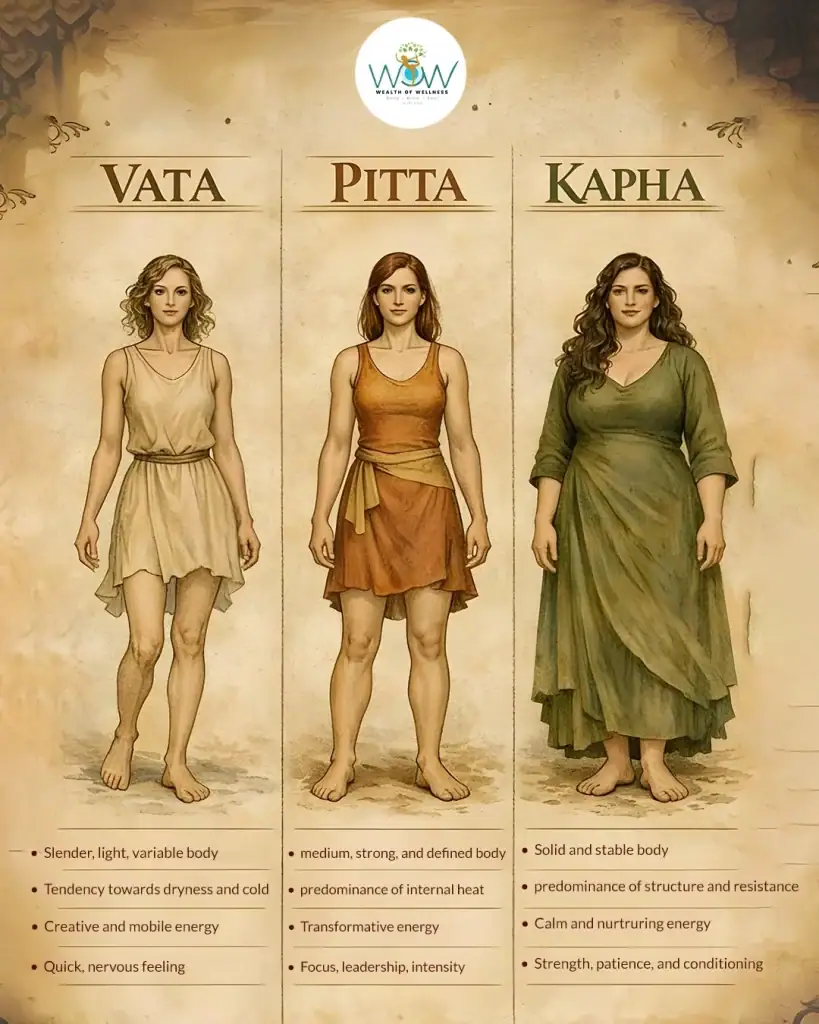
Vata individuals tend to be slender or thin-framed with prominent joints. Their skin is dry, and they often feel cold easily. Digestion is naturally variable; they may experience irregular appetite patterns. Vata controls the nervous system, so Vata types are quick, alert, and energetic. They sleep lightly and benefit from consistent sleep routines.
Mental & Emotional Traits
Vata minds are quick and creative. These individuals are imaginative, intuitive, and love novelty and change. When Vata is well-balanced, this gift for adaptability shines. Vata types think and speak quickly, and benefit from grounding practices during active seasons to maintain clarity and focus.
When Vata Calls for Support
Vata is naturally high during autumn and early winter, and during active, busy seasons. During these times, Vata benefits from extra grounding support. If you notice dryness, variable digestion, or a sense of movement and change, this is an invitation to strengthen your grounding routine with warming foods, consistent sleep, and calming practices.
Balancing Vata
Vata thrives with warmth, routine, and grounding practices. Warm foods (soups, cooked vegetables, healthy fats) calm Vata. Regular sleep schedules, gentle movement, and oil massage are essential. Abhyangam, a warm oil massage, is a traditional Vata-balancing treatment that grounds the nervous system and nourishes dry skin. For digestive health, Vasti (enema therapy) gently regulates Vata and relieves constipation.
Pitta Dosha: The Dosha of Transformation
Pitta is composed of fire and water elements. It is hot, sharp, oily, penetrating, and intense. Pitta governs digestion, metabolism, and transformation. It is the seat of willpower, courage, and leadership.
Physical Characteristics of Pitta
Pitta individuals are medium-framed with good muscle definition. They have warm bodies and naturally glowing, radiant skin. Pitta has an excellent appetite and strong digestion. These individuals have sharp minds and quick reflexes. They run warm and perform best in cooler environments.
Mental & Emotional Traits
Pitta minds are sharp, focused, and ambitious. These individuals are natural leaders, driven, results-oriented, and passionate about their goals. They speak with confidence and conviction. When Pitta is well-directed, this intensity creates excellence and achievement. Pitta benefits from cooling practices and adequate rest to channel its powerful energy sustainably.
When Pitta Calls for Cooling
Pitta is naturally high during summer and midday hours when external heat peaks. During these times, Pitta benefits from cooling support. If you notice increased heat in your body or mind, this is an invitation to introduce cooling foods, calming practices, and adequate rest to maintain your natural radiance and focus.
Balancing Pitta
Pitta needs cooling and calming influences. Cooling foods (coconut, cucumber, leafy greens, sweet fruits) and spices (cilantro, fennel, mint) support your natural coolness. Regular, moderate exercise (not competitive) helps channel Pitta’s intensity. Adequate sleep and cooling practices calm the mind. Summer Ayurvedic treatments designed specifically to cool and balance Pitta are highly effective. Shirodhara, a cooling oil treatment on the forehead, is excellent for Pitta to calm the mind and support inner peace.
Kapha Dosha: The Dosha of Stability
Kapha is composed of earth and water elements. It is heavy, stable, cool, and oily. Kapha provides structure, immunity, and emotional grounding. It is the principle of love, patience, and stability.
Physical Characteristics of Kapha
Kapha individuals are sturdy and broad-framed with strong muscles and bones. They have thick, oily skin and hair. Kapha types have steady metabolism and strong physical structure. They have consistent energy levels, sleep deeply and restfully, and enjoy natural immunity. Their bodies are cool and moist.
Mental & Emotional Traits
Kapha minds are stable, grounded, and calm. These individuals are loyal, patient, nurturing, and emotionally steady. They are reliable friends and supportive partners. When Kapha is well-balanced, this stability becomes a great strength. Kapha thrives with regular movement and stimulating activities that keep energy flowing naturally.
When Kapha Calls for Stimulation
Kapha is naturally high during late winter and spring when external moisture and heaviness peak. During these seasons, Kapha benefits from energizing support. If you notice heaviness or a desire for more movement, this is an invitation to increase dynamic activity, warm stimulating foods, and invigorating practices that awaken your natural vitality.
Balancing Kapha
Kapha needs stimulation, warmth, and movement. Warm, stimulating foods (ginger, black pepper, garlic) and light meals support Kapha’s metabolism. Vigorous exercise, running, dancing, and strength training mobilizes Kapha’s heavy quality. Swedhanam (herbal steam therapy) is an excellent Kapha treatment that mobilizes toxins and stimulates circulation. Regular routines with early rising and consistent activity keep Kapha’s energy flowing vibrantly.
How to Identify Your Dosha
Your Prakriti (birth constitution) is determined at conception and remains constant. However, your Vikriti (current state) can shift based on diet, season, and lifestyle. To identify your dosha, observe your natural tendencies when you are healthy and in balance.
Quick Dosha Indicators
Are you typically:
| Vata | Pitta | Kapha |
|---|---|---|
| Thin, light frame | Medium, athletic build | Sturdy, broad frame |
| Dry skin and hair | Warm body, glowing skin | Oily skin and hair |
| Cold hands and feet | Runs warm easily | Cool body, stable energy |
| Quick, adaptable mind | Sharp, focused mind | Calm, stable mind |
| Irregular appetite | Strong appetite | Steady appetite |
| Light sleeper | Moderate sleep | Deep sleeper |
| Active, creative | Ambitious, driven | Patient, loyal |
| Thrives with routine | Thrives with moderation | Thrives with movement |
Dual Doshas
Most people are not purely one dosha. Vata-Pitta individuals combine creativity with drive. Pitta-Kapha types blend leadership with stability. Vata-Kapha individuals have creativity with grounding (though this is less common). Your secondary dosha influences your health profile and requires attention too.
Seasonal Dosha Shifts
Even if you are primarily Vata, Pitta increases naturally in summer, and Kapha rises in late winter. Your wellness routine adapts beautifully with these shifts. This is why Ayurvedic consultation is valuable : a practitioner can assess your constitution and seasonal patterns to create a personalized plan that flows with nature.
Balancing Your Doshas
True wellness is about honoring your unique dosha and supporting its natural strengths toward greater harmony.
Universal Balancing Principles
Routine & Consistency: All doshas benefit from regular wake times, meal times, and bedtimes. Vata thrives with grounded routines. Kapha flourishes with dynamic, energizing routines that keep vitality flowing.
Stress Management: All doshas benefit from stress-relief practices. Yoga can help you achieve work-life balance and support your natural dosha harmony during challenging periods. Trusted Ayurvedic herbalists recommend dosha-specific practices to support your constitution year-round.
Seasonal Awareness: Adjust your diet and activities with the seasons. Eat lighter in spring, cooling foods in summer, and warming foods in fall and winter.
Professional Support: Self-care creates a foundation. Professional Ayurvedic support deepens your results. Panchakarma is a comprehensive Ayurvedic rejuvenation program designed to restore your doshas to their optimal state and enhance your well-being.
Access Your Dosha Services
Explore Ayurvedic services at Wealth of Wellness that are tailored to each dosha. From oils and herbs to specialized treatments, each therapy is designed to support your unique constitution.
FAQ
FAQs
Q: Can my dosha change?
A: Your Prakriti stays constant throughout your life, while your Vikriti (current expression) shifts based on lifestyle, diet, stress, and season. A Kapha person may express more Vata during stressful periods, but their foundational Kapha nature remains.
Q: What if I don’t fit clearly into one dosha?
A: Most people are dual-dosha, which is completely normal and actually more common. Balance both doshas in your lifestyle with primary focus on your dominant type.
Q: Can I combine Njavara Kizhi with other treatments?
A: Absolutely! It works beautifully alongside our comprehensive holistic wellness programs, yoga, and other Ayurvedic treatments. It pairs wonderfully with medical care and enhances your overall wellness strategy. Discuss with your healthcare provider to ensure harmony with any current treatments.
Q: How accurate is self-assessment?
A: Self-assessment provides a wonderful starting point and useful guidance. A professional practitioner can offer additional depth using pulse and tongue diagnosis.
Q: How long does wellness optimization take?
A: Some benefits appear within days. Deeper shifts typically develop over weeks to months with consistent practice.
Q: Do I need to follow my dosha perfectly?
A: Not at all. Even small, thoughtful adjustments create noticeable benefits. Start with one or two supportive changes like using the right oil for your dosha and naturally build from there.
Q: How do seasonal changes affect my dosha?
A: Each season has different qualities that influence how doshas express. Cold, dry seasons emphasize Vata qualities. Warm, intense seasons emphasize Pitta qualities. Cool, heavy seasons emphasize Kapha qualities. Adjusting your practices seasonally helps you stay in harmony throughout the year.
Next Steps: Get Personalized Guidance
Knowing your dosha is the beginning. True wellness comes from applying this knowledge to your life, adjusting your diet, routine, and practices to support your unique body.
Book an Ayurvedic consultation with Wealth of Wellness at +971 56 522 7986 to receive a personalized dosha assessment and treatment plan. Our practitioners will identify your Prakriti and Vikriti, answer your questions, and guide you toward lasting balance and vitality.
Your body is wise. The doshas are its language. Learn to listen, and wellness will follow.
References & External Resources
- Chopra Center. (n.d.). Discover the Three Doshas. Retrieved from https://www.chopra.com/articles/the-three-doshas
- Banyan Botanicals. (n.d.). The Three Doshas: Vata, Pitta, and Kapha. Retrieved from https://www.banyanbotanicals.com/ayurveda/the-three-doshas/
- The Ayurveda Institute. (n.d.). Ayurvedic Constitution. Retrieved from https://www.ayurveda.com/ayurvedic-constitution/

DR. Aswathy Vishnu
Dr. Aswathy Vishnu, BAMS, MD (Ayurveda) is a qualified Ayurveda physician specializing in pain management, stress-related disorders, metabolic health, and chronic conditions. With advanced training from Amrita Vishwa Vidyapeetham, Kerala, she combines traditional Ayurvedic principles with personalized dietary, lifestyle, and wellness strategies to help patients achieve sustainable health outcomes.


Andrew4517
July 22, 2026https://shorturl.fm/ZkJWv