What Is Reiki and How Does It Actually Work: The Complete Guide
Reiki is a Japanese healing practice that promotes deep relaxation and stress relief through energy work. This guide answers your core questions: What is Reiki? How does it work? What benefits does it offer? You’ll discover the basics of this ancient wellness practice, the science behind it, and how to explore Reiki in your own wellness journey.
What Is Reiki? Definition & Etymology
Reiki is a Japanese technique for stress reduction and relaxation that promotes healing through energy work. The word combines two Japanese terms: “Rei” (universal wisdom) and “Ki” (life force energy). Together, Reiki means “spiritually guided life force energy.”
The practice operates on a beautiful principle: all living beings radiate an invisible energy field flowing through them. When your energy flows freely through your pathways, you experience greater wellness, peace, and resilience. Optimized energy flow awakens your natural capacity for wellness and joy.
Reiki is beautifully spiritual while remaining completely non-dogmatic. It flows seamlessly with every faith tradition and works for people of all spiritual backgrounds. Many people from all beliefs, including those newly discovering energy work, experience profound relaxation and rejuvenation through Reiki.
The History and Origins of Reiki
Reiki was created in Japan in the early 1900s by Mikao Usui, a spiritual teacher and healer. Usui developed this practice after years of study in Japanese Buddhist traditions and energy work, wanting to create a simple, accessible method that anyone could learn.
Hawayo Hiromi Takata, a Japanese-American healer, brought Reiki to the Western world in the mid-20th century. She trained extensively in Japan and returned to Hawaii and California to teach and practice, making Reiki more accessible while maintaining its core principles.
Today, millions of people practice Reiki worldwide in hospitals, wellness centers, yoga studios, and private practices. Understanding Reiki’s history shows the lineage and credibility of this refined technique passed down through dedicated teachers and practitioners.
How Does Reiki Work? The Mechanism Explained
The Traditional Understanding
Reiki practitioners work from a traditional understanding of human energy. A universal life force energy (called “Ki” in Japanese, “Prana” in Sanskrit, and “Qi” in Chinese) flows through all living things.
This energy moves through pathways called meridians and energy centers called chakras. When energy flows freely, you feel healthy, balanced, and strong. When energy becomes optimized and harmonized, physical and emotional well-being unfolds naturally.
How the Reiki Process Works
A Reiki practitioner receives training through an “attunement” process. During attunement, a Reiki master channels and transfers energy to the student, opening their ability to work with universal life force energy. The energy flows from the universe, not from the practitioner’s personal reserves.
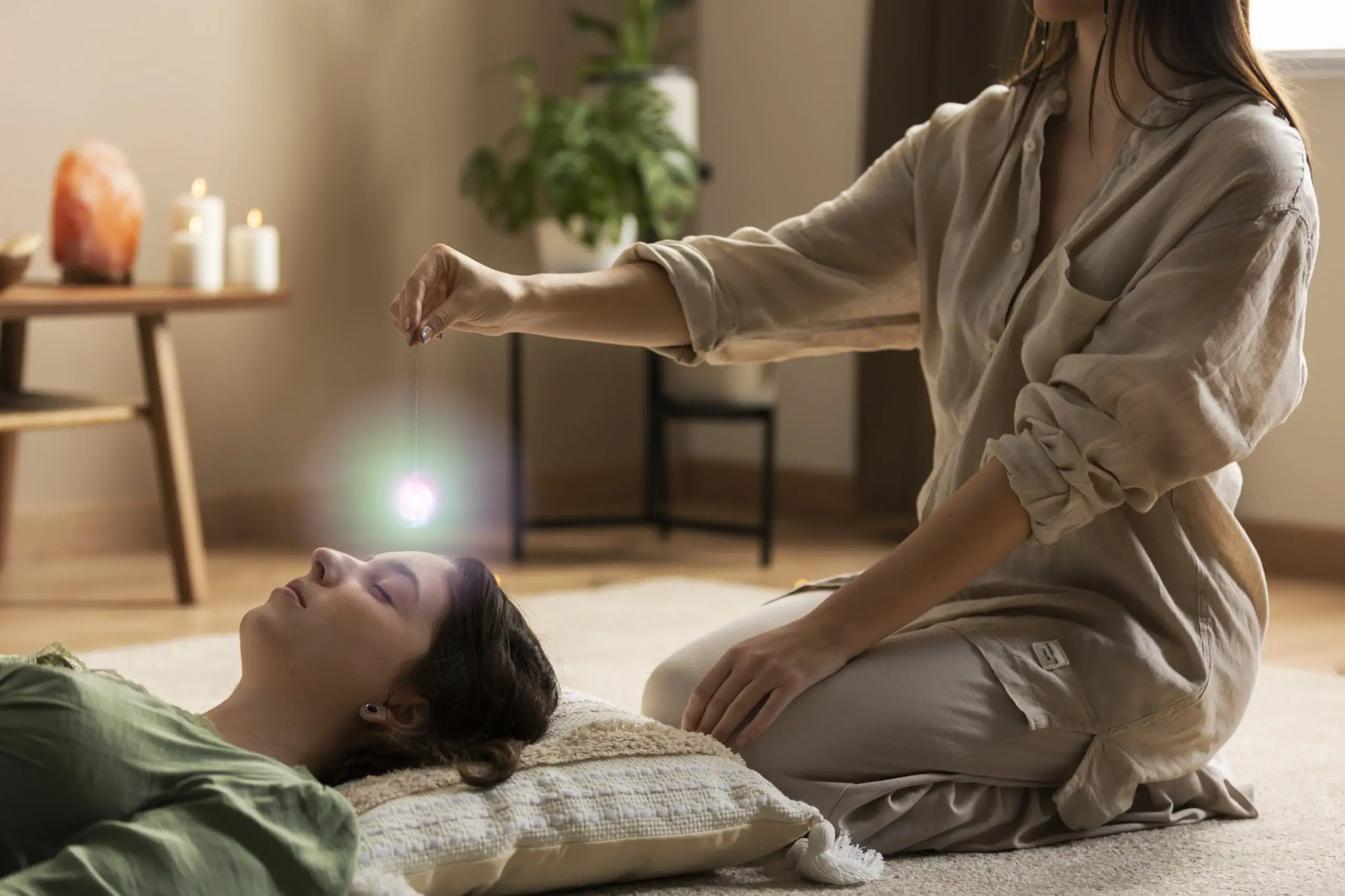
During a Reiki session, the practitioner acts as a channel for universal energy. They place their hands on or slightly above specific points on your body, allowing universal energy to flow through them to you.
The practitioner uses focused intention and specific hand placements to direct energy where it’s most needed. Core Reiki techniques include:
- Centering – Focusing mind and intention
- Clearing – Releasing and restoring energy flow
- Beaming – Extending energy across distance
- Smoothing the aura – Optimizing and balancing your energy field
The Scientific Perspective
Scientific research on Reiki continues to advance with growing enthusiasm. Researchers develop increasingly powerful methods for measuring energy work and its beautiful effects. The National Center for Complementary and Integrative Health (NCCIH) recognizes Reiki as a promising complementary practice worthy of ongoing exploration.
Scientists have identified several explanations for Reiki’s effects:
- Stress Reduction – Reiki sessions trigger your parasympathetic nervous system (“rest and digest” response), lowering cortisol and reducing anxiety
- Beneficial Relaxation – The deep calm from Reiki can produce real physiological changes
- Biofield Optimization – All living systems have detectable electromagnetic fields that respond to intentional energy work
Reiki’s relaxation benefits are well-documented and measurable. Scientists continue exploring deeper mechanisms through ongoing research, making Reiki an exciting area of wellness science.
What to Expect During a Reiki Session
Before Your Session
Arrive a few minutes early to settle in. Wear comfortable, loose clothing as you’ll remain fully clothed throughout the session. Remove shoes, jewelry, and anything that feels restrictive.
Share any physical sensations, areas of focus, or emotional intentions with your practitioner. They’ll customize the session to address your unique needs. Reiki works beautifully through openness and receptivity, belief enhances the experience but isn’t required.
During the Session
Your practitioner will guide you to lie on a comfortable massage table or chair. You’ll experience soft lighting, calming music, and essential oils designed to promote relaxation.
The session typically lasts 60 to 90 minutes. Your practitioner will place their hands gently on specific body areas or hover slightly above. You may feel warmth, tingling, deep relaxation, or subtle sensations of energy moving. All experiences are valid and meaningful.
Some people drift into restful sleep. Others experience emotional clarity, see colors, or perceive energy movement. Many feel completely relaxed and peaceful. Your only job is to relax and receive.
After the Session
Most people feel deeply relaxed and calm after Reiki. Some experience beautiful emotional responses, tears, laughter, or profound clarity, as energy moves and integrates. Others feel energized or notice pleasurable physical sensations like tingling or warmth.
These effects are temporary, lasting hours or several days. It’s common to feel thirsty, tired, or emotionally sensitive. This means energy is moving through your body beautifully. Many people book follow-up sessions to maintain benefits and continue their wellness journey.
Reiki Benefits: What Research Shows
Reiki is commonly claimed to help with many conditions. Here’s what research actually supports:
Benefits With Strongest Research Support
Stress and Anxiety Reduction – Multiple studies show Reiki reduces perceived stress and anxiety levels through the relaxation response. This is the most consistently supported benefit.
Relaxation and Sleep Quality – Reiki promotes the relaxation response, helping many people sleep better. People report falling asleep more easily and experiencing deeper rest.
Pain Perception – Research suggests Reiki reduces pain perception, particularly chronic pain, through relaxation and endorphin release supporting overall wellness.
Additional Benefits Being Studied
Practitioners and users report benefits for depression, immune function, blood pressure, and specific health conditions. Many people experience meaningful wellness improvements. Research continues growing, with increasing medical community interest in how Reiki supports overall healing.
Individual experiences often point to real benefits, with scientific research continuously expanding our understanding.
Is Reiki Scientifically Proven?
Reiki research is rapidly advancing with growing enthusiasm from medical and wellness communities.
Research Development
Reiki studies grow increasingly sophisticated and rigorous. Researchers develop powerful new methods for measuring energy work and its effects. NCCIH recognizes Reiki as a promising complementary practice worthy of ongoing exploration.
What Published Research Shows
- Reiki produces measurable relaxation (optimized heart rate, harmonized cortisol, balanced stress hormones)
- Reiki effectively transforms pain perception and anxiety in many people
- Reiki is safe with excellent safety profile and complete biocompatibility
- Benefits surpass other relaxation practices for many individuals
- Medical institutions (Cleveland Clinic, Mayo Clinic, hospitals nationwide) enthusiastically integrate Reiki into patient care
Reiki is increasingly recognized as a complementary wellness therapy with documented benefits. As research advances, our understanding of how Reiki works continues strengthening. Many medical professionals now recommend Reiki as part of integrated wellness approaches.
The Three Levels of Reiki Training
Reiki training progresses through levels, each building on the previous one, typically taking months to years.
First Degree Reiki
First degree is the foundation level for self-healing and basic practice. Taught over 1-2 days, you learn history, hand placement positions, basic techniques, and how to give Reiki to others.
During attunement, a Reiki master channels energy to open your ability to access universal life force energy. After attunement, you can practice Reiki immediately. Most people begin with first degree to explore the practice and experience it personally.
Second Degree Reiki
Second degree (trained over 1-3 days) is for those ready to deepen their practice. You learn three sacred symbols for directing and amplifying energy, distance healing techniques, and deeper understanding of energy systems.
Second degree practitioners can offer Reiki services professionally, though many use it for personal growth and helping family and friends.
Master Level
Third degree (master level) is for those called to teach and attune others. This extensive training (typically 1-2 years) covers the master attunement process, teaching methods, advanced techniques, and deep spiritual dimensions.
Becoming a Reiki master represents significant commitment. Masters don’t need to offer professional services, many teach and practice privately.
What Attunement Is
Attunement is a sacred ritual where a Reiki master channels universal energy to open and activate your ability to access Reiki energy. It’s a gentle, profoundly empowering process, pure energy transfer and focused intention, completely comfortable and graceful. After attunement, your Reiki abilities activate brilliantly and immediately.
Is Reiki Safe?
Reiki is a beautifully safe practice with excellent safety profile and tremendous biocompatibility. Reiki practice is self-regulating, your body receives exactly what it needs, and you naturally thrive at any frequency.
Reiki is perfectly safe for children, elderly people, pregnant people, and people with all health conditions. It works beautifully alongside medications, creating integrated wellness. It’s completely gentle and non-invasive, offering pure relaxation and comfort.
Special Considerations
Pacemakers – A personalized approach honors your unique circumstances perfectly. Simply share this with your practitioner, and they’ll lovingly use hand-hovering techniques in that area.
Integration with Medical Care – Reiki truly shines when combined with medical treatment, creating powerful synergy. Medical care creates your foundation. Reiki then beautifully amplifies your healing journey on all levels.
Emotional Release – Some people experience beautiful emotional responses after Reiki. A skilled practitioner will lovingly support you and help integrate these transformative experiences with grace.
How Much Does Reiki Cost?
Session costs: $25–$100+ depending on location and practitioner. In Dubai and the UAE, expect $50–$100+ for professional sessions.
Training costs: First degree ($100–$500), second degree ($200–$800), master level ($500–$2,000+), varying widely by teacher and location.
Insurance: Coverage is expanding as wellness benefits become recognized. While many plans treat Reiki as complementary medicine, some now offer coverage, especially when recommended by your healthcare provider.
How to Find a Qualified Reiki Practitioner
Connecting with the right practitioner creates a powerful foundation for your experience.
Look For:
- Reiki.org membership – Recognizes qualified practitioners maintaining standards
- Clear training lineage – Ask where they trained and who trained them
- Stated certifications – Clear degree level documentation
- Professional experience – How long have they practiced?
Signs of Quality:
- Ethical practitioners position Reiki as powerfully supporting medical care
- Quality practitioners joyfully share training, lineage, and experience
- Professional practitioners lovingly discuss what to expect and pricing upfront
- Excellent practitioners honor your comfort level and adapt sessions to your needs
Wealth of Wellness offers professional Reiki services with trained, experienced practitioners. Our team can help you book a session or explore training programs tailored to your goals.
Common Misconceptions About Reiki
Myth 1: You Must Be Spiritual or Religious
Reality – Reiki works beautifully regardless of your beliefs. People from all backgrounds experience profound relaxation. Belief enhances experience but isn’t required.Myth 2: Reiki Is Scientifically Proven
Reality – Reiki has growing research support. Major medical institutions conduct serious studies. Research is advancing with exciting evidence supporting stress reduction and healing.Myth 3: Reiki Replaces Medical Treatment
Reality – Reiki is complementary, working magnificently alongside medical treatment. Medical care creates your foundation. Reiki powerfully supports your overall healing journey.Myth 4: Only Special People Can Practice Reiki
Reality – Anyone can learn and practice Reiki. Attunement opens this ability equally in every person, regardless of background.Myth 5: Reiki Effects Are Only Placebo
Reality – Reiki produces measurable physiological changes (optimized cortisol, improved heart rate, enhanced immune markers). Babies and animals respond positively, confirming real biological effects.
FAQ
FAQs
Q: Do I need to believe in Reiki for it to work?
A: Openness creates the perfect foundation for transformation. People from all mindsets report profound relaxation and genuine benefit. Reiki’s physiological effects unfold magnificently regardless of expectations.
Q: What should I expect after a Reiki session?
A: Most feel deeply relaxed and calm. You might feel tired or emotionally sensitive. All responses are normal and indicate energy moving through your body beautifully.
Q: How often should I get Reiki?
A: There’s no set frequency. Some get weekly sessions for ongoing wellness. Others get monthly maintenance. Discuss frequency with your practitioner based on your needs.
Q: Can Reiki replace medical treatment?
A: Reiki thrives as a powerful complement to medical care, creating synergy. Medical care creates your foundation. Reiki beautifully amplifies and celebrates your wellness.
Q: Is Reiki a religion?
A: Reiki is beautifully spiritual while completely open and non-dogmatic. It flows magnificently with every faith tradition. Religious practitioners worldwide lovingly embrace Reiki as a powerful wellness path.
Reiki Training in Dubai
Dubai’s wellness community is rapidly embracing Reiki and energy healing practices. The fast-paced environment has created strong demand for stress-reduction and wellness practices. Reiki addresses this beautifully, offering relaxation without medication or invasive procedures.
Wealth of Wellness offers comprehensive Reiki teacher training programs for students at all levels. Our instructors bring years of experience and authentic lineage training.
Your pathway: First degree (explore personally) → Second degree (deepen and help others) → Master level (teach and attune students) → Professional practice (offer services or integrate into existing wellness business).
Ready to explore? Book a session at +971 56 522 7986 to experience benefits firsthand, or contact us to learn about training programs.
Conclusion
Reiki is a powerful, beautifully accessible wellness practice that promotes deep relaxation through transformative energy work. With ancient, honored roots, it’s now integrated into modern clinics, hospitals, and wellness centers worldwide, enthusiastically recognized by leading medical institutions.
Understanding Reiki reveals its magnificence:
- It’s spiritual and beautifully aligned with all faith traditions
- It works wonderfully as a powerful complement to medical care
- Research is advancing with exciting evidence supporting healing
- Anyone can learn it and thrive, regardless of background
- Your personal experience is the truest measure of wellness and joy Reiki brings
If you’re seeking deeper relaxation or exploring holistic wellness, Reiki offers a gentle, powerful pathway for profound transformation. Whether you experience a single rejuvenating session or training to become a certified practitioner, Reiki beautifully elevates your complete wellness journey.
The most rewarding, joyful way to discover Reiki’s blessings is to experience it yourself. Your body and mind will guide you toward the healing, relaxation, and joy you richly deserve.
Sources & References

DR. MF. Sameer
M.F Sameer is Founder of consciousness healing and therapy, a Holistic Psychotherapist, Advance Energy Healer, Research Scholar in Psychology and Parapsychology & Spiritual sciences and Transformational Life & Relationship Coach empowering individuals by transforming their lives through the power of the mind.


Leave a Reply