
7 Chakras and Their Meanings: A Beginner's Guide
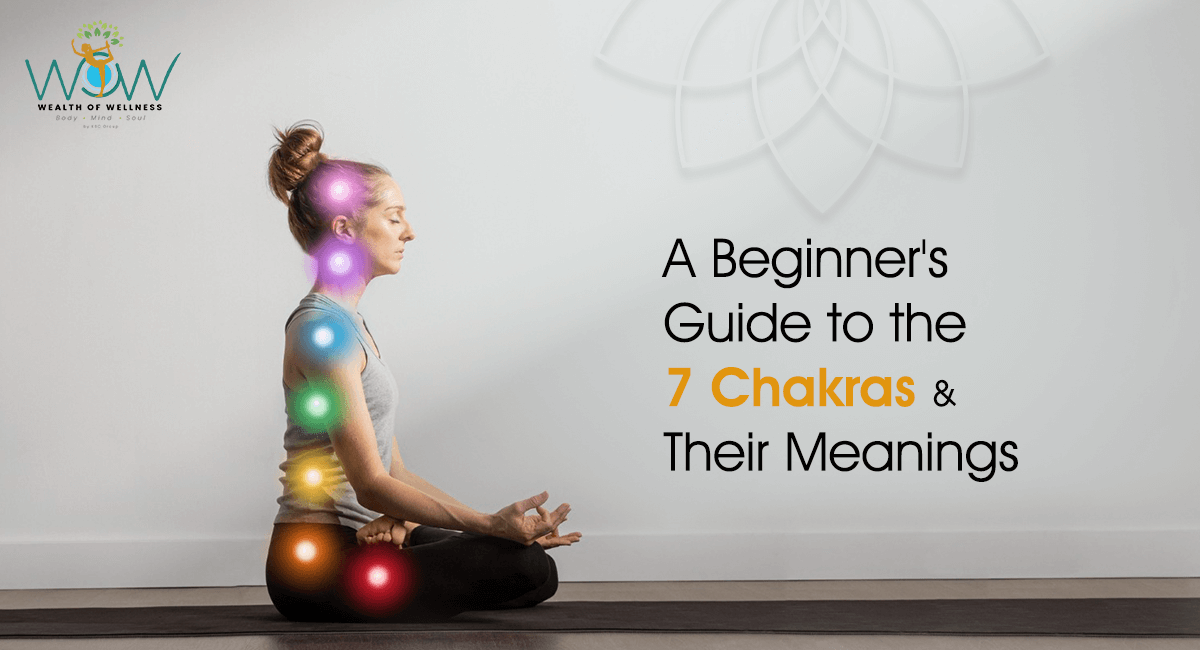
The 7 chakras and their meanings give you a simple map of your inner world. Each chakra links one area of the body with a life theme, such as safety, confidence, love or intuition.
This guide is for beginners who have heard about chakras in a yoga class, a Reiki session or a sound bath. You will learn what each chakra means, where it sits, its colour, element and mantra. You will also learn where the system comes from and six easy ways to start balancing your chakras.
What Are Chakras?
A chakra is an energy centre described in yoga and Tantric traditions. The word comes from the Sanskrit cakra, which means "wheel" or "circle".
These traditions describe a life force called prana. Prana moves through thousands of subtle channels called nadis. The seven main chakras sit along the central channel, called sushumna, from the base of the spine to the top of the head.
Chakras belong to an energy map rather than an anatomy chart. Think of them as a framework for noticing how your body, emotions and thoughts connect. This idea sits at the heart of energy healing.
The 7 Chakras at a Glance: Chakra Chart
The seven chakras run in order from the base of the spine (1) to the crown of the head (7). The lower three relate to the physical self. The heart chakra is the bridge. The upper three relate to expression, insight and awareness.
| # | Chakra | Sanskrit name (meaning) | Location | Colour | Element | Bija mantra | Petals | Life theme |
|---|---|---|---|---|---|---|---|---|
| 1 | Root | Muladhara (root support) | Base of the spine | Red | Earth | LAM | 4 | Safety, grounding |
| 2 | Sacral | Svadhisthana (one's own seat) | Lower belly, below the navel | Orange | Water | VAM | 6 | Emotions, creativity, pleasure |
| 3 | Solar Plexus | Manipura (city of jewels) | Upper belly, above the navel | Yellow | Fire | RAM | 10 | Confidence, willpower |
| 4 | Heart | Anahata (unstruck) | Centre of the chest | Green | Air | YAM | 12 | Love, compassion, connection |
| 5 | Throat | Vishuddha (purification) | Throat | Blue | Ether (space) | HAM | 16 | Communication, truth |
| 6 | Third Eye | Ajna (command, perception) | Between the eyebrows | Indigo | Light (mind) | OM | 2 | Intuition, clarity |
| 7 | Crown | Sahasrara (thousand-petalled) | Top of the head | Violet or white | Consciousness | Silence or OM | 1,000 | Awareness, purpose |
A bija mantra is a one-syllable "seed sound". People chant it during meditation to focus on one chakra at a time.
The 7 Chakras and Their Meanings
Each section below explains one chakra's meaning, how balance may feel, and one simple practice to try. The signs describe emotional patterns. For any physical concern, your doctor is the best first step.
1. Root Chakra (Muladhara): Safety and Grounding
The root chakra is the foundation of the chakra system. It sits at the base of the spine and relates to your sense of safety, stability, and belonging.
- When balanced: You feel steady, secure and present in your body.
- When it needs attention: You may wish for more stability, routine or a sense of home.
- Simple practice: Stand barefoot on grass or sand for two minutes. Try grounding poses such as Mountain Pose and Warrior II from our guide to beginner yoga poses.
2. Sacral Chakra (Svadhisthana): Emotions and Creativity
The sacral chakra sits in the lower belly, just below the navel. It relates to emotions, creativity, pleasure, and the ability to go with the flow. Its element is water.
- When balanced: You express feelings easily and enjoy creative activities.
- When it needs attention: Inspiration may come less easily, or feelings may take longer to express.
- Simple practice: Spend 10 minutes on a creative task with no goal, such as drawing, dancing, or journaling.
3. Solar Plexus Chakra (Manipura): Confidence and Willpower
The solar plexus chakra sits in the upper belly, between the navel and the breastbone. It is the centre of personal power, self-esteem and decision-making. Its element is fire.
- When balanced: You feel confident, motivated, and clear about your choices.
- When it needs attention: You may want more confidence when making decisions.
- Simple practice: Set one small goal each morning and complete it. Core-strengthening poses such as Boat Pose are also linked to this chakra.
4. Heart Chakra (Anahata): Love and Compassion
The heart chakra sits at the centre of the chest. It is the bridge between the three lower chakras and the three upper chakras. It relates to love, compassion, forgiveness, and connection.
- When balanced: You give and receive care with ease and feel connected to others.
- When it needs attention: You may wish for closer connection, or forgiveness may take more time.
- Simple practice: Try a short forgiveness meditation, or write down three things you are grateful for.
5. Throat Chakra (Vishuddha): Communication and Truth
The throat chakra sits at the throat. It relates to self-expression, honest communication, and active listening. Its element is ether, or space.
- When balanced: You speak clearly and listen well.
- When it needs attention: Listening may come more easily than sharing your own view.
- Simple practice: Hum or chant the mantra HAM for one minute. Many people also enjoy a sound bath, which uses voice and instruments to focus attention on sound.
6. Third Eye Chakra (Ajna): Intuition and Clarity
The third eye chakra sits between the eyebrows. It relates to intuition, imagination, insight and clear thinking.
- When balanced: You trust your inner sense and think with clarity.
- When it needs attention: Your thoughts may feel busy, and clarity may take more effort.
- Simple practice: Close your eyes and rest your attention between the eyebrows for five slow breaths. Guided meditation classes can help you build this habit.
7. Crown Chakra (Sahasrara): Awareness and Purpose
The crown chakra sits at the top of the head. Traditions describe it as a thousand-petalled lotus. It relates to awareness, meaning and a sense of connection to something larger than yourself.
- When balanced: You feel calm, open and guided by a sense of purpose.
- When it needs attention: You may be seeking a clearer sense of direction or meaning.
- Simple practice: Sit in silence for five minutes each day. Our guide to spiritual wellness shares more daily habits.
Where Does the Seven-Chakra System Come From?
The seven-chakra system comes from Indian Tantric texts. The best-known source is the Ṣaṭ-Cakra-Nirūpaṇa ("Explanation of the Six Chakras"), written by Pūrṇānanda Yati in 1577. It describes six chakras plus the crown, which makes seven.
Earlier traditions described a wide variety of systems. Some Buddhist and Hindu texts describe four, five, or six chakras. The seven-chakra model became standard much later.
The system reached the West in the early 20th century. Sir John Woodroffe translated the 1577 text in his book The Serpent Power. The familiar rainbow colours came later still. C.W. Leadbeater added them in his 1927 book The Chakras (source). This explains why traditional Indian sources and modern charts sometimes use different colours.
To learn how these ideas fit into the wider story of yoga, read our article on the history of yoga philosophy.
What Does Science Say About Chakras?
Chakras are a traditional framework rather than a physical structure, so science focuses on the practices people use with them.
Research supports several of these practices for general wellbeing:
- Yoga: Reviews show beneficial effects on perceived stress and anxiety symptoms. Studies also report better sleep in several groups (NCCIH).
- Meditation and mindfulness: These practices may help with anxiety and depression and may improve sleep quality (NCCIH).
So the most useful way to see chakras is as a framework for self-awareness. The seven themes give your mind a clear focus. The practices give your body and breath a way to relax. Together, they can support you as you manage everyday stress.
How to Balance Your Chakras: 6 Beginner Practices
Chakra balancing means using simple daily practices to bring attention, breath and calm to each area of your life. Start with one practice and build from there.
- Yoga. Each pose draws attention to a part of the body. Grounding poses suit the root chakra. Heart-opening poses, such as Cobra, suit the heart chakra. Beginners get the most from learning with a qualified teacher and starting with foundational poses.
- Meditation. Sit quietly and rest your attention on one chakra's location. Picture its colour as you breathe. Read more about the benefits of meditation.
- Breathwork. Slow belly breathing calms the body. Breathe in for four counts and out for six counts, for two minutes.
- Mantra. Chant each bija mantra (LAM, VAM, RAM, YAM, HAM, OM) from root to crown. The sound gives your mind a single point of focus.
- Sound healing. Singing bowls and gongs create long, steady tones. Many people find them deeply relaxing. Learn what to expect when you try sound healing in Dubai.
- Reiki and energy healing. In Reiki, a practitioner rests their hands lightly on or above the body. Many people use it as a relaxation practice alongside chakra work.
A 5-Minute Chakra Check-In for Beginners
This short routine helps you notice which area of your life needs attention today. You can do it seated, in bed, or at your desk.
- Sit tall and close your eyes. Take three slow breaths.
- Bring your attention to the base of your spine. Ask yourself, "Do I feel safe and steady today?"
- Move your attention up through each chakra in order. Ask one question at each point: creativity, confidence, connection, expression, clarity, and purpose.
- Notice which question you would most like to explore. That is your focus area for the day.
- Choose one practice from the section above that matches that chakra. Spend five minutes on it later in the day.
Over a few weeks, you may notice patterns. For example, you might notice your throat chakra calls for attention during busy work weeks. That insight helps you plan thoughtful self-care.
Chakra Healing at Wealth of Wellness, Dubai
Wealth of Wellness (WOW) is a DHA-regulated holistic wellness centre in Jumeirah 1, Dubai. Our practitioners combine chakra work with yoga, meditation, sound healing and Reiki in one personalised plan.
A session usually starts with a conversation about your goals and how you feel. Your practitioner may then offer an aura and chakra reading, followed by a practice such as sound healing or Reiki.
Chakras also connect with other traditional systems we use. Ayurveda describes the body through the three doshas. Marma therapy works with vital points, several of which sit near the main chakras.
If you would like guidance on your first steps, you can book a session with our team at +9714 832 2599. For those who want to go deeper, our Reiki teacher training covers energy work in detail.
Frequently Asked Questions
What are the 7 chakras in order?
The 7 chakras in order, from bottom to top, are the root, sacral, solar plexus, heart, throat, third eye, and crown chakras. Their Sanskrit names are Muladhara, Svadhisthana, Manipura, Anahata, Vishuddha, Ajna and Sahasrara.
What does each chakra colour mean?
Each colour links to the chakra's theme. Red is grounding, orange is creativity, yellow is confidence, green is love, blue is communication, indigo is intuition, and violet is awareness. The rainbow colour scheme was added in the 20th century.
How do I know if a chakra needs balancing?
In chakra traditions, a chakra that needs balancing (often called "blocked") shows up as a recurring pattern in its life theme. For example, wanting more confidence links to the solar plexus chakra. For any physical concern, your doctor is the right first step.
Which chakra supports a sense of calm and safety?
Chakra traditions link a sense of safety and calm to the root chakra. Grounding practices, slow breathing and meditation can help you feel steadier. For ongoing worry or anxiety, a qualified professional can offer extra support.
Which chakra should beginners start with?
Most teachers suggest beginners start with the root chakra. It is the foundation of the system, and grounding practices are simple to learn.
Are chakras scientifically proven?
Chakras are a traditional framework rather than a physical structure that science measures. Research does support several practices used in chakra work, including yoga and meditation, for stress, mood and sleep.
How long does chakra balancing take?
Timelines vary from person to person. Many people notice they feel calmer after a single meditation or sound session. Lasting change comes from regular practice over weeks and months.
Is chakra healing safe?
Gentle practices such as meditation, breathwork and sound healing are generally considered low-risk. Yoga is generally safe for healthy people when they practise with a qualified teacher. Chakra work fits best alongside the care of your doctor.
Sources
- Chakra – Wikipedia (etymology, the 1577 text, Woodroffe, Leadbeater colours, scientific evidence)
- Yoga: Effectiveness and Safety – NCCIH (stress, anxiety, sleep, safety)
- 8 Things to Know About Meditation and Mindfulness – NCCIH (anxiety, depression, sleep)

Afsin Khudalkar
Wellness & Healing Practitioner | Dubai Afsin Kudalkar is a multi-certified holistic wellness practitioner offering integrative healing services across four specialized modalities. Certified in Sound Healing (Rieshi Institute, 3 years), Vinyasa Yoga (Vinyasa Yoga Academy, 3 years), Reiki (Usui Shiki Ryoho lineage, 1 year), and Aura Healing (Rieshi Pune, 3 years), she brings a decade of combined practice to restoring balance across body, mind, and spirit. Her sound healing sessions harness vibrational frequencies for stress relief and inner harmony, while her Vinyasa classes build strength and breath-movement connection for all levels. As a traditional Reiki healer, Afsin channels universal life energy for deep healing, and her aura work clears energetic blockages and realigns vital fields. Based in Dubai, she creates safe, nurturing spaces for transformative wellness journeys.

Leave a Reply