
Steps to Wellness: The Combined Power of Foot Reflexology and Acupressure
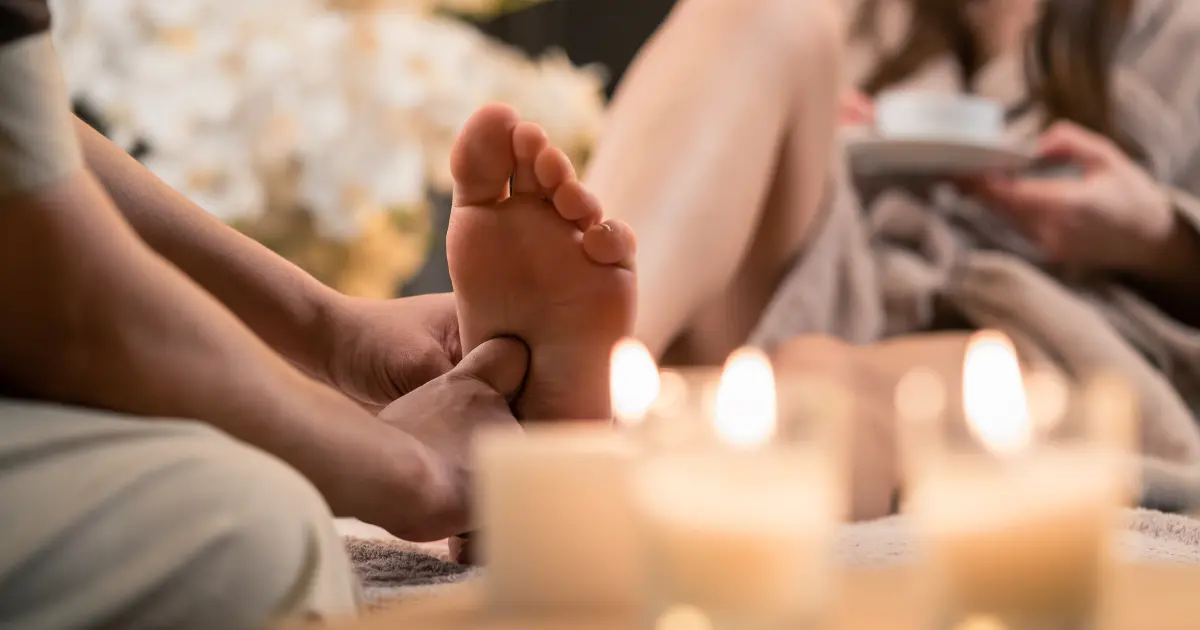
Foot reflexology and acupressure both use focused pressure to help the body relax. Reflexology follows a map of the whole body drawn on the feet. Acupressure follows the energy pathways of Traditional Chinese Medicine. Your feet are where these two maps meet.
This guide is for anyone curious about pairing the two therapies. You will learn how they differ, which acupressure points sit on and near the feet, and what research says. You will also get a simple 5-minute routine to try at home.
Quick Answer: How Do Foot Reflexology and Acupressure Work Together?
Foot reflexology and acupressure work together by using two complementary maps on the same part of the body. Reflexology works the reflex zones of the soles in a flowing sequence. Acupressure then holds selected acupoints on the meridians that begin and end in the feet. Together, they create a deeper, more personal session focused on calm and rest.
What Is Foot Reflexology?
Foot reflexology is a complementary therapy that applies pressure to reflex zones on the feet. Each zone is believed to correspond to a part of the body.
A reflexologist uses the thumbs and fingers in small, walking movements. The modern method grew from Dr. William Fitzgerald's zone therapy in 1917 and Eunice Ingham's foot charts in the 1930s. The right foot reflects the right side of the body, and the left foot reflects the left side.
For a detailed foot map, read our beginner's guide to foot reflexology. Our article on the history and benefits of foot reflexology covers its origins in depth.
What Is Acupressure?
Acupressure is a needle-free therapy that applies steady pressure to specific points on the body, called acupoints.
Acupressure comes from Traditional Chinese Medicine (TCM). TCM describes vital energy, or qi, flowing along pathways called meridians. According to Healthline, the body has 12 major meridians and more than 360 acupoints.
Acupressure uses the same points as acupuncture but replaces needles with fingers and thumbs. Cleveland Clinic advises holding most points for about one to two minutes. If you are curious about the needle-based approach, explore acupuncture at Wealth of Wellness.
Foot Reflexology vs Acupressure: Key Differences
Foot reflexology works a whole-body map on the feet, while acupressure presses individual points along the body's meridians. Both use touch, but each brings a different style and focus.
| Feature | Foot reflexology | Acupressure |
|---|---|---|
| Origin | Modern method from the early 1900s, with ancient roots | Traditional Chinese Medicine |
| Map | 10 vertical zones mirrored on the feet, hands and ears | 12 major meridians across the whole body |
| Where it is applied | Mainly the soles, tops and sides of the feet | Anywhere on the body, including the feet and lower legs |
| Technique | Thumb-walking: small, moving pressure in a set sequence | Press and hold: steady pressure on one point |
| How it feels | Flowing and rhythmic | Still and focused |
| Main focus | The whole body, worked through the feet | Selected points chosen for a specific goal |
The two maps do not match point for point. The University of Minnesota explains that reflexology zones are similar to, but not the same as, the meridians of Chinese medicine. This difference is exactly why the two therapies pair well. Each one adds something the other leaves out.
Where the Two Maps Meet on Your Feet
Six of the 12 major meridians begin or end in the feet. This makes the feet a natural meeting place for reflexology and acupressure.
| Meridian | Where it meets the foot |
|---|---|
| Spleen | Begins at the inner corner of the big toenail |
| Liver | Begins at the outer corner of the big toenail |
| Kidney | Begins on the sole, just behind the ball of the foot |
| Stomach | Ends at the second toe |
| Gallbladder | Ends at the fourth toe |
| Bladder | Ends at the little toe |
In one session, a therapist can work the reflex zones across the sole. They can then hold acupoints along these six channels. Your feet receive both a broad, whole-body sequence and precise, focused points.
Other healing traditions also treat the feet as a map. Sujok therapy views the hands and feet as small models of the whole body. Ayurveda describes vital points called Marma, and several lie on the feet. You can learn more in our guide to Marma therapy.
For full-body work along the same channels, meridian massage follows the meridians from head to toe.
5 Acupressure Points on and Near the Feet
These five points are among the most widely used acupoints on the feet and lower legs. The uses listed are traditional uses from TCM.
| Point | Where to find it | Traditionally used for | How to press |
|---|---|---|---|
| KI1 (Yongquan, "Gushing Spring") | On the sole, in the hollow just behind the ball of the foot. Curl your toes to find it. | Calm and grounding | Firm thumb pressure for 1 to 2 minutes |
| LV3 (Taichong, "Great Rushing") | On top of the foot, in the dip between the big toe and second toe bones, just before they meet | Easing everyday tension | Steady thumb pressure for about 1 minute |
| GB41 (Zulinqi) | On top of the foot, between the bones of the fourth and fifth toes, just before they meet | Comfort along the outer foot and the sides of the head | Gentle thumb pressure for about 1 minute |
| SP6 (Sanyinjiao) | On the inner lower leg, four finger-widths above the inner ankle bone, just behind the shin bone | Rest and restful sleep | Gentle pressure for 1 to 2 minutes. Skip this point during pregnancy. |
| ST36 (Zusanli) | On the outer lower leg, four finger-widths below the kneecap and one finger-width outside the shin bone | Energy and digestion | Firm thumb pressure for 1 to 2 minutes |
The sole is one of the body's most responsive areas. A 2024 anatomical study in Medicina found that the KI1 point sits close to the muscles and nerves the foot uses for balance.
A mild, dull ache helps you find the right spot. The pressure should always feel comfortable.
Benefits of Combining Foot Reflexology and Acupressure
A combined session gives you two kinds of touch: flowing movement and still, focused pressure. Here is what people most often enjoy.
Deeper Relaxation
Reflexology's rhythmic movement helps the nervous system shift into its "rest and digest" mode. Held acupoints then add moments of stillness. Many people find this combination deeply calming. To carry that calm through your week, try these everyday stress management techniques.
More Restful Sleep
Sleep is one of the most studied outcomes for both therapies. Reflexology and acupressure have each improved sleep quality in clinical trials. For more evening habits, read our guide to natural ways to sleep better.
A Calmer, Brighter Mood
Research links foot reflexology with lower anxiety and a lifted mood. Quiet, focused touch gives the mind a welcome pause from busy days.
Refreshed, Comfortable Feet
Your feet carry you through long days. Both therapies give them direct, caring attention. For a warm-oil option rooted in Ayurveda, try Padhabhyanga foot massage.
A More Personal Session
Reflexology covers the whole foot map. Acupressure lets your therapist focus on your goal, such as calm or sleep. Together, they shape a session around your needs.
What Research Says
Research shows encouraging results for both therapies, especially for relaxation and sleep.
- Foot reflexology, mood and sleep. A 2020 meta-analysis pooled 26 randomised controlled trials with 2,366 adults. Foot reflexology improved sleep quality and reduced symptoms of anxiety and depression. More total treatment time was linked with better sleep.
- Acupressure and reflexology side by side. A 2024 clinical trial followed 102 adults receiving leukaemia care. Both SP6 acupressure and foot reflexology improved sleep quality compared with standard care alone. The two therapies performed equally well.
- A second comparison. A 2019 trial with 90 adults on hemodialysis found that both reflexology and acupressure improved sleep quality.
These studies tested each therapy on its own. Research on combined sessions is still emerging. Cleveland Clinic notes that reflexology studies often show a benefit when added to usual care, and that larger, well-designed studies will build on this work.
| Outcome | What research shows | Our view |
|---|---|---|
| Relaxation | Consistently reported in studies and by clients | Well supported |
| Sleep quality | Positive results in trials of both therapies | Promising |
| Anxiety and mood | Positive results in a large meta-analysis | Promising |
| Combined sessions | Early stage of research | An area for future research |
Our article on reflexology and circulation explores another area of ongoing research.
A 5-Minute Combined Routine for Home
You can bring both therapies into your evening routine. Spend about two and a half minutes on each foot.
- Settle in. Sit comfortably and rest one foot across the opposite knee. Take three slow breaths.
- Warm the sole. Use your thumb to take tiny steps from heel to toes, three times. This is a simple reflexology warm-up.
- Hold KI1. Curl your toes and find the hollow behind the ball of your foot. Press firmly and hold for one minute while you breathe slowly.
- Press LV3. Slide your finger between the big toe and second toe bones until it rests in the dip. Hold for 30 seconds.
- Hold SP6. Place four fingers above your inner ankle bone and press just behind the shin bone for 30 seconds. Skip this step if you are pregnant.
- Finish with long strokes. Stroke the whole sole from toes to heel. Then switch to the other foot.
Use pressure that feels firm but comfortable. A mild ache helps you find a point, and you can lighten your touch at any time.
How to Enjoy Both Therapies Safely
Foot reflexology and acupressure are gentle, hands-only therapies that suit most healthy adults. You can adjust the pressure at any moment.
A quick chat with your doctor helps you enjoy your sessions with confidence if you have:
- A circulation condition, or a history of blood clots in the legs
- Gout
- Foot ulcers, open skin or a fungal skin condition on the feet
- A low platelet count or a tendency to bruise easily
- Epilepsy or a thyroid condition
If you are expecting a baby, tell your therapist before your session. Traditional practice avoids the SP6 point during pregnancy, and some foot points receive extra care. Our guide to gentle care during pregnancy covers nurturing options for each stage.
Both therapies complement medical care. Continue any treatment your doctor recommends.
How Often Should You Book a Session?
Many people start with one session a week for four to six weeks. After that, a session every two to four weeks helps maintain the benefits.
The 2020 meta-analysis linked more total treatment time with better sleep. Regular sessions, supported by a short home routine, help you get the most from both therapies.
Foot Reflexology and Acupressure at Wealth of Wellness, Dubai
Wealth of Wellness brings foot reflexology and Traditional Chinese Medicine therapies together under one roof. Our DHA-regulated centre is in Jumeirah 1, near La Mer, and is open every day from 8 AM to 8 PM.
Our Integrated Foot Reflexology session lasts 45 minutes and costs AED 150. It blends classic reflexology with Kansa Vatki, a traditional Ayurvedic foot massage that uses a small bronze bowl. For acupoint-based care, our naturopathy team offers meridian massage, acupuncture and Sujok therapy.
Every visit starts with a short consultation. Your therapist can then recommend the combination that suits your goals. If calm and better sleep are your focus, our De-Stress programme brings several therapies together.
Ready to take your first step? Book a session or call our team on +971 56 522 7986.
Final Thoughts
Your feet hold two healing maps in one place. Foot reflexology works the whole body through flowing pressure on the soles. Acupressure adds still, focused pressure on the meridians that begin and end in the feet. Whether you book a session or try the 5-minute routine tonight, both therapies offer a simple path to calm and restful sleep.
Frequently Asked Questions
Is reflexology the same as acupressure?
No. Reflexology works reflex zones on the feet, hands and ears that map to the whole body. Acupressure presses acupoints along meridians across the entire body. Both use focused touch, and they pair well together.
Can you combine foot reflexology and acupressure in one session?
Yes. A therapist can work the reflex zones of the feet and then hold selected acupoints on the feet and lower legs. The combination offers both flowing and focused pressure in one session.
Which acupressure point on the foot helps with sleep?
KI1 (Yongquan), on the sole, is traditionally used for calm and grounding before bed. SP6, just above the inner ankle, has been studied for sleep quality. Avoid SP6 during pregnancy.
Is acupressure the same as acupuncture?
Acupressure and acupuncture use the same points, but acupressure uses fingers and thumbs instead of needles. Learn more about how acupuncture works.
How long should I press an acupressure point?
Hold most points for one to two minutes with steady, comfortable pressure. Breathe slowly while you press.
Is foot reflexology and acupressure safe during pregnancy?
Many people enjoy reflexology during pregnancy with their doctor's or midwife's approval. Always tell your therapist that you are pregnant, and choose a therapist with pregnancy training. Traditional practice avoids the SP6 point during pregnancy.
How soon will I feel the benefits?
Most people feel relaxed after their first session. Benefits for sleep and mood often build over several regular sessions.
Sources
- Wang W-L, et al. Effect of Foot Reflexology Intervention on Depression, Anxiety, and Sleep Quality in Adults: A Meta-Analysis and Metaregression of Randomized Controlled Trials. Evidence-Based Complementary and Alternative Medicine, 2020.
- Parizad N, et al. Comparing the Efficacy of Acupressure and Foot Reflexology on Sleep Quality in Patients With Leukemia. Integrative Cancer Therapies, 2024.
- Emamverdi M, et al. Comparing the Effects of Reflexology Massage and Acupressure on the Quality of Sleep in Hemodialysis Patients. Journal of Mazandaran University of Medical Sciences, 2019.
- Anatomical study of the KI1 acupoint (Yongquan). Medicina, 2024.
- Cleveland Clinic. Reflexology: What It Is, and Does It Work?
- Cleveland Clinic. Acupressure Points
- University of Minnesota, Taking Charge of Your Wellbeing. How Does Reflexology Work?
- Healthline. Acupressure

DR. Ripple Parmar
Dr. Ripple Parmar, [BAMS] Ayurvedic Physician | Holistic Wellness & Nutrition Specialist Dr. Ripple Parmar is an Ayurvedic physician with 15+ years of clinical experience. She specialises in perimenopause and menopause, PCOS, hormonal health, and gut health. She also provides supportive holistic care for neurodivergent children and adults, alongside the medical care they already receive. Using Nadi Pariksha (pulse assessment) and Prakriti (body constitution) analysis, she creates personalised diet and lifestyle plans that combine classical Ayurveda with modern nutrition, with a focus on long-term wellbeing.

Leave a Reply