
What Is Reiki and How Does It Actually Work: The Complete Guide
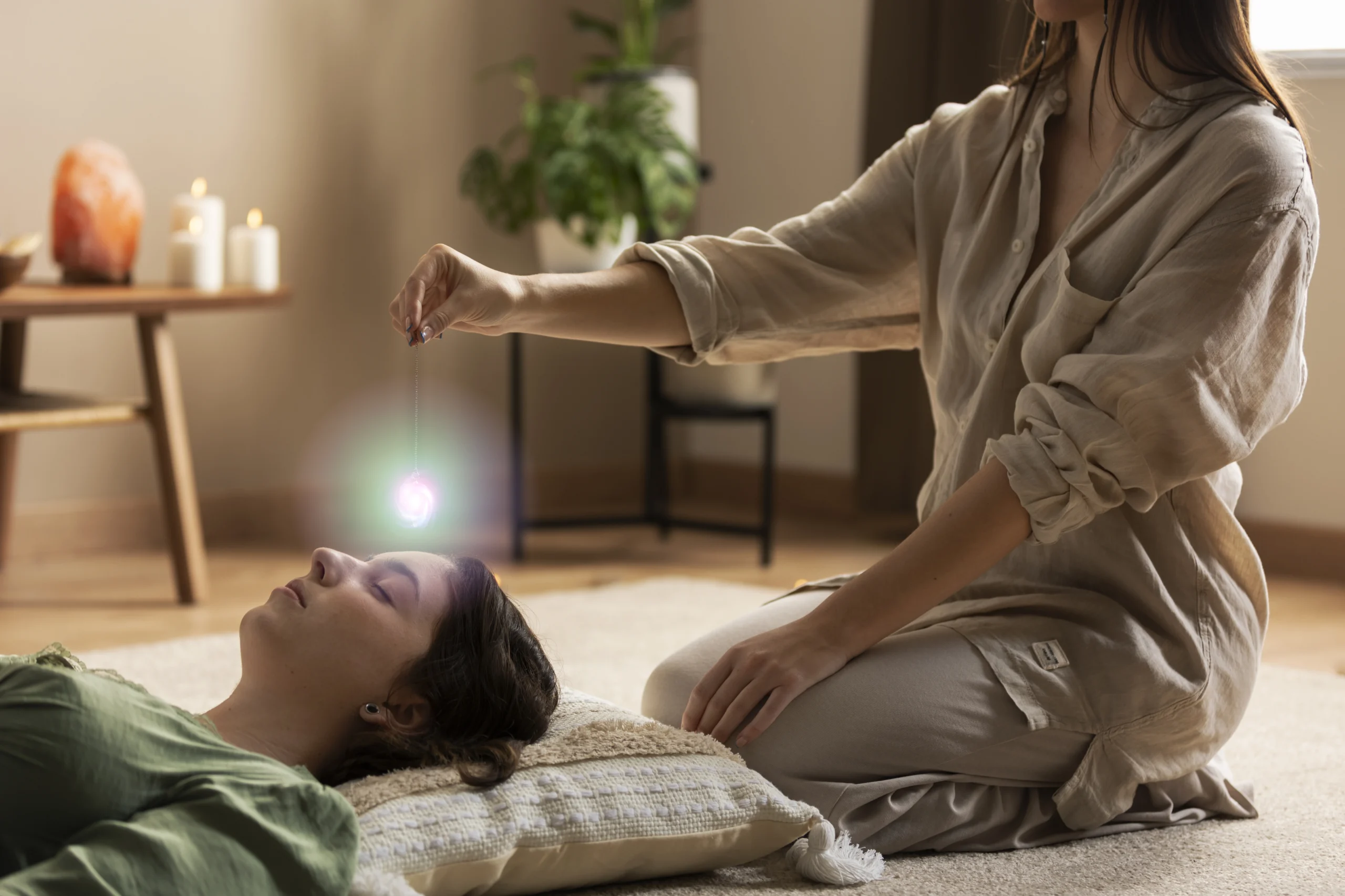
What is Reiki? Reiki is a gentle Japanese energy-healing practice. A trained practitioner places their hands lightly on or just above your body to help you relax. People use Reiki to ease stress, feel calmer and support their overall wellbeing.
This guide is for anyone who is curious about Reiki and wants clear, honest answers. You will learn where Reiki comes from, how it works, what research says, what a session feels like and how to choose a practitioner in Dubai.
What Is Reiki?
Reiki is a complementary therapy in which a practitioner uses light, non-invasive touch to support deep relaxation and a sense of balance. It is not a massage, and it does not replace medical care.
Reiki belongs to a wider family of practices known as energy healing. These practices share one core idea: a natural life-force energy supports your health and wellbeing.
What does the word Reiki mean?
Reiki (pronounced ray-key) joins two Japanese words. "Rei" means universal or higher power. "Ki" means life-force energy. Together, Reiki is often translated as "universal life-force energy."
The idea of life-force energy is not unique to Japan. Traditional Chinese Medicine calls it qi. Ayurveda and yoga call it prana.
Reiki at a glance
| Fact | Detail |
|---|---|
| Origin | Japan, early 1920s |
| Founder | Mikao Usui |
| Type | Complementary, hands-on or hands-off energy practice |
| Session length | Usually 45 to 60 minutes |
| Clothing | You stay fully clothed |
| Touch | Light touch, or hands hovering above the body |
| Main use | Relaxation and stress relief |
| Safety | No harmful effects reported (NCCIH) |
Where Did Reiki Come From?
Reiki began in Japan in the early 20th century. Three people shaped the practice most people learn today.
- Mikao Usui (1865–1926). A Japanese teacher who developed Reiki after a period of meditation and fasting on Mount Kurama. He founded his Reiki society in Tokyo in 1922.
- Chujiro Hayashi (1880–1940). A former naval officer and student of Usui. He opened a Reiki clinic in Tokyo and organised a standard set of hand positions.
- Hawayo Takata (1900–1980). A Japanese-American woman from Hawaii who trained with Hayashi. She brought Reiki to Hawaii in 1937 and later trained the first Western Reiki Masters.
Today, the most widely practised form is Usui Reiki. Many newer styles exist, but most trace back to Usui's original teachings.
How Does Reiki Work?
Reiki is thought to work by helping your body shift into a calm, restful state. Practitioners explain this in terms of energy. Researchers explain it in terms of relaxation. Both views help you understand what to expect.
What Reiki practitioners believe
Practitioners believe a life-force energy flows through all living things. When this energy is low or blocked, a person may feel stressed, tired or out of balance.
During a session, the practitioner acts as a channel. They do not give you their own energy. Instead, they aim to guide universal energy to where your body needs it most.
Many practitioners also link Reiki with the body's main energy centres. To explore this idea, read our guide to the seven chakras and their meanings.
What science currently says
Science has not confirmed that the energy described in Reiki exists. The US National Center for Complementary and Integrative Health (NCCIH) states that Reiki has not been clearly shown to work for any specific health purpose. It also notes that much of the research is small and of mixed quality.
At the same time, research is growing. A 2025 meta-analysis in Systematic Reviews found that Reiki was linked with better quality of life across randomised controlled trials. A 2019 review in BMJ Supportive & Palliative Care reported promising effects on pain, anxiety and quality of life, and called for larger studies.
The fair summary is simple. Many people report real benefits, and the evidence is still developing. Reiki works best as a complement to medical care, never a replacement.
The relaxation response: the most likely explanation
Many researchers link Reiki's calming effect to the relaxation response. This is the body's natural "rest and digest" state, controlled by the parasympathetic nervous system.
A Reiki session encourages this state in several ways: a quiet room, slow breathing, gentle touch and an hour with no screens or demands. As the body relaxes, breathing tends to slow and muscle tension eases.
This helps explain why people often feel calm after Reiki, whatever their view on energy.
What Are the Potential Benefits of Reiki?
Reiki's main benefit is deep relaxation. The other benefits people report grow from that calm state. Results vary from person to person.
- Stress relief. Many people use Reiki to unwind and step away from daily pressure. It pairs well with other stress management techniques.
- A calmer mind. Some studies suggest Reiki may ease feelings of anxiety. For ongoing worry, it can sit within a wider plan, such as holistic anxiety support in Dubai.
- Better rest. Deep relaxation can make it easier to switch off at night. Read more about insomnia causes and natural solutions.
- Comfort alongside medical care. Some hospitals and hospices offer Reiki to help patients feel more at ease. Cancer Research UK notes that people with cancer use it to relax and cope, though it cannot treat cancer.
- A stronger sense of wellbeing. The 2025 meta-analysis linked Reiki with improved quality of life scores.
- Emotional balance. Many people describe a feeling of lightness, clarity or release after a session.
Reiki does not diagnose, treat or cure disease. It is best seen as a supportive practice for everyday wellbeing.
What Happens During a Reiki Session?
A Reiki session is quiet, gentle and fully clothed. Most sessions follow five simple steps.
- Consultation. The practitioner asks about your health, your goals and how you feel today. Mention any medical conditions or treatments.
- Getting comfortable. You lie on a treatment table or sit in a chair. You remove only your shoes, glasses and any bulky jewellery.
- Hand placements. The practitioner places their hands lightly on, or just above, set areas of your body. They usually move from head to feet and stay in each position for a few minutes.
- Rest and stillness. You simply rest. There is no talking unless you want to talk. Many people drift into a light, sleep-like state.
- Closing and aftercare. The practitioner gives you time to come back slowly. Drink water and take it easy for the rest of the day.
What does Reiki feel like?
Every person feels Reiki differently. Common sensations include:
- warmth from the practitioner's hands
- gentle tingling or a soft pulsing feeling
- deep calm or a pleasant heaviness in the body
- emotional release, such as tears or a sense of lightness
Some people feel nothing unusual during the session, and that is normal too. Feeling calm afterwards is the most common experience.
How many Reiki sessions do you need?
There is no fixed number. Many people try one session to see how they feel. Cancer Research UK notes that some practitioners suggest about three sessions close together, then a break.
For longer-term goals, such as easing ongoing stress, a regular series often works better than a single visit. In the 2025 meta-analysis, programmes of eight or more sessions lasting at least 60 minutes showed the strongest effect on quality of life.
How to prepare for your first session
- Wear loose, comfortable clothes.
- Eat a light meal a little beforehand.
- Avoid strong coffee or energy drinks just before your session.
- Arrive a few minutes early so you can settle in.
Reiki vs. Massage vs. Acupuncture vs. Meditation
Reiki is often confused with other relaxing therapies. The main difference is pressure: Reiki uses little or no physical pressure.
| Feature | Reiki | Massage | Acupuncture | Meditation |
|---|---|---|---|---|
| What it involves | Light touch or hands hovering | Hands-on work on muscles | Fine needles at set points | Focused attention |
| Pressure | None to very light | Moderate to firm | Needles, little pressure | None |
| Clothing | Fully clothed | Usually undressed and draped | Partly clothed | Fully clothed |
| Main focus | Relaxation and energy balance | Muscle tension and circulation | Energy flow and pain relief | Mind, attention and stress |
| Who does it | A trained practitioner, or you after training | A therapist | A licensed practitioner | You, alone or guided |
| Often chosen for | Deep rest and emotional calm | Tight, sore muscles | Specific pain and wellness goals | Daily stress habits |
These therapies work well together. Many people pair Reiki with meditation or sound healing for a fuller relaxation routine.
The Five Reiki Principles
Mikao Usui taught five simple principles, known in Japanese as the Gokai. Each one begins with the words "Just for today."
- Just for today, I will not be angry.
- Just for today, I will not worry.
- Just for today, I will be grateful.
- Just for today, I will do my work honestly.
- Just for today, I will be kind to every living thing.
These principles work as a daily reflection. You do not need a session to use them. Many people repeat them each morning as part of a wider routine to improve their spiritual wellness.
Who Is Reiki For?
Reiki suits most adults who want a gentle, non-invasive way to relax. It may appeal to you if you:
- feel stressed, overworked or close to burnout
- want a calm break from screens and busy routines
- are exploring holistic or spiritual practices
- want extra comfort alongside your medical treatment
- prefer a therapy with little or no physical pressure
Is Reiki safe?
Reiki is considered very safe. The NCCIH reports that Reiki has not been shown to have any harmful effects. Because it uses light or no touch, it suits many people who cannot have deep massage.
A few simple steps help you use Reiki wisely:
- Keep seeing your doctor for any health condition. Reiki supports your care; it does not replace it.
- Tell your doctor about any complementary therapy you use.
- Tell your practitioner if you are pregnant, recovering from surgery or living with a mental health condition.
- Seek medical help for any emergency. Reiki is not an emergency treatment.
Reiki Levels Explained: Can You Learn Reiki Yourself?
Yes, anyone can learn Reiki. Students train with a Reiki Master, who passes on the practice through a short ritual called an attunement.
Most Usui Reiki courses follow four levels:
| Level | Focus | What you can do after |
|---|---|---|
| Level 1 (First Degree) | Self-healing and the basics | Practise Reiki on yourself, family and friends |
| Level 2 (Second Degree) | Reiki symbols and distance Reiki | Offer sessions to others, in person or remotely |
| Level 3 (Advanced / Master) | The Master symbol and advanced techniques | Deepen your personal practice |
| Level 4 (Master Teacher) | Teaching and attunements | Teach and attune new students |
Level 1 is a good starting point if you want a simple self-care tool. At Wealth of Wellness, Dr. MF Sameer leads our Reiki teacher training across all four levels.
Common Myths About Reiki
- "Reiki is a religion." Reiki is a spiritual practice, but it has no creed or required beliefs. People of all faiths practise it.
- "You must believe in Reiki for it to help." You do not need any belief to try Reiki. Many curious sceptics book a session simply to relax.
- "Reiki is a type of massage." Reiki uses little or no pressure and does not work on the muscles.
- "Reiki can cure disease." Reiki does not diagnose, treat or cure illness. It supports relaxation and wellbeing alongside medical care.
- "Only gifted people can do Reiki." Reiki is a learned skill. Anyone can train in it.
How to Choose a Reiki Practitioner in Dubai
Reiki training standards vary around the world, so it pays to choose with care. Cancer Research UK advises choosing a practitioner with at least Level 2 training. Use this checklist:
- They hold at least a Level 2 Reiki qualification.
- They can tell you who trained them and which Reiki style they follow.
- They work in a licensed, regulated setting.
- They ask about your health before the session begins.
- They explain each step clearly and respect your comfort.
- They never ask you to stop or replace medical treatment.
At Wealth of Wellness, Reiki and other energy-healing sessions take place at our DHA-regulated wellness centre in Jumeirah 1, Dubai. Our energy-healing work is led by Dr. MF Sameer, a holistic psychotherapist and advanced energy healer.
Frequently Asked Questions About Reiki
Is Reiki safe?
Yes. Reiki uses light or no touch, and no harmful effects have been reported. Keep following your doctor's advice for any health condition.
Does Reiki actually work?
Many people feel calmer and more relaxed after Reiki. Research shows promising results for wellbeing, but science has not confirmed the energy Reiki describes. Its calming effect is likely linked to the body's relaxation response.
Is Reiki a religion?
No. Reiki is a spiritual practice with no religious beliefs required. People of every faith use it.
Can Reiki be done remotely?
Yes. Level 2 practitioners learn distance Reiki, which they practise without being in the same room. Research on distance Reiki is more limited than research on in-person sessions.
How long does a Reiki session last?
Most sessions last 45 to 60 minutes. Some practitioners also offer shorter or longer sessions.
What should I wear to a Reiki session?
Wear loose, comfortable clothes. You stay fully clothed throughout the session.
Can I do Reiki on myself?
Yes. Level 1 training teaches you to practise Reiki on yourself as part of daily self-care.
Can I have Reiki during pregnancy?
Reiki is gentle and uses light touch, so many people enjoy it during pregnancy. Speak with your doctor first and tell your practitioner that you are pregnant.
Final Thoughts
Reiki is a gentle Japanese practice that helps many people relax, release stress and feel more balanced. Science is still exploring how it works, but its calming effect and strong safety record make it easy to try alongside your regular care.
The best way to understand Reiki is to experience it. Book a consultation with our team at Wealth of Wellness, or explore our Reiki teacher training to learn the practice yourself.
External sources

DR. MF. Sameer
M.F Sameer is Founder of consciousness healing and therapy, a Holistic Psychotherapist, Advance Energy Healer, Research Scholar in Psychology and Parapsychology & Spiritual sciences and Transformational Life & Relationship Coach empowering individuals by transforming their lives through the power of the mind.

Leave a Reply